1
Bale opening and first sorting
Nodes 1–3
Bale opener → Belt conveyor → Manual sorting platform
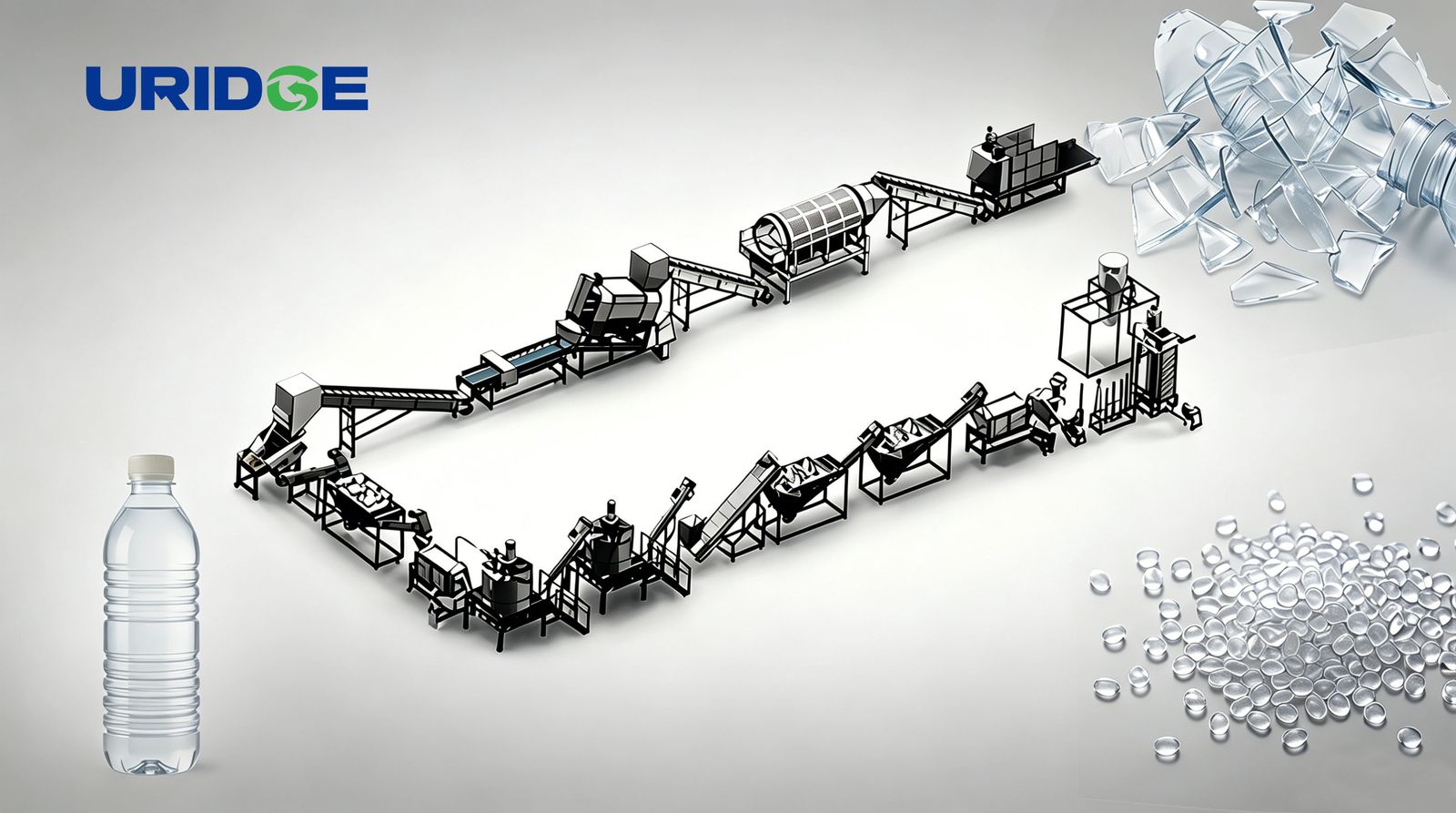
Plastic Recycling Washing Line
Configure a PET bottle washing line around the actual feedstock, contamination profile, target flakes, utilities and acceptance method. The documented reference flow contains 32 nodes in eight stages; 1,000 kg/h is a reference-project design capacity, not a guaranteed output.
Project-specific configuration
Bottle source, bale condition, labels, caps, color mix, residual contents and contamination all affect sorting, washing, drying and acceptance requirements.
Documented reference process
The stage grouping is a reader-oriented summary. Node ranges preserve the controlling order of the documented 32-node reference process.
Nodes 1–3
Bale opener → Belt conveyor → Manual sorting platform
Nodes 4–6
Belt conveyor → Bottle label remover → Manual sorting platform
Nodes 7–9
Belt conveyor → Crusher → Screw transfer
Nodes 10–13
Wash tank → Screw transfer → Mechanical dewatering → Screw transfer
Nodes 14–17
Hot washer 1 → Screw transfer → Hot washer 2 → Screw transfer
Nodes 18–21
High-speed friction washer → Wash tank → Screw transfer → Mechanical dewatering
Nodes 22–26
Screw transfer → Wash tank → Screw transfer → Wash tank → Screw transfer
Nodes 27–32
Mechanical dewatering → Pipeline hot-air drying → Label & Light-Fraction Separator → Lifting loader → Color sorter → Platform
Some screw-transfer functions are integrated into adjacent wash tanks or dewatering machines. Final standalone equipment quantities must follow the approved process layout and bill of materials.
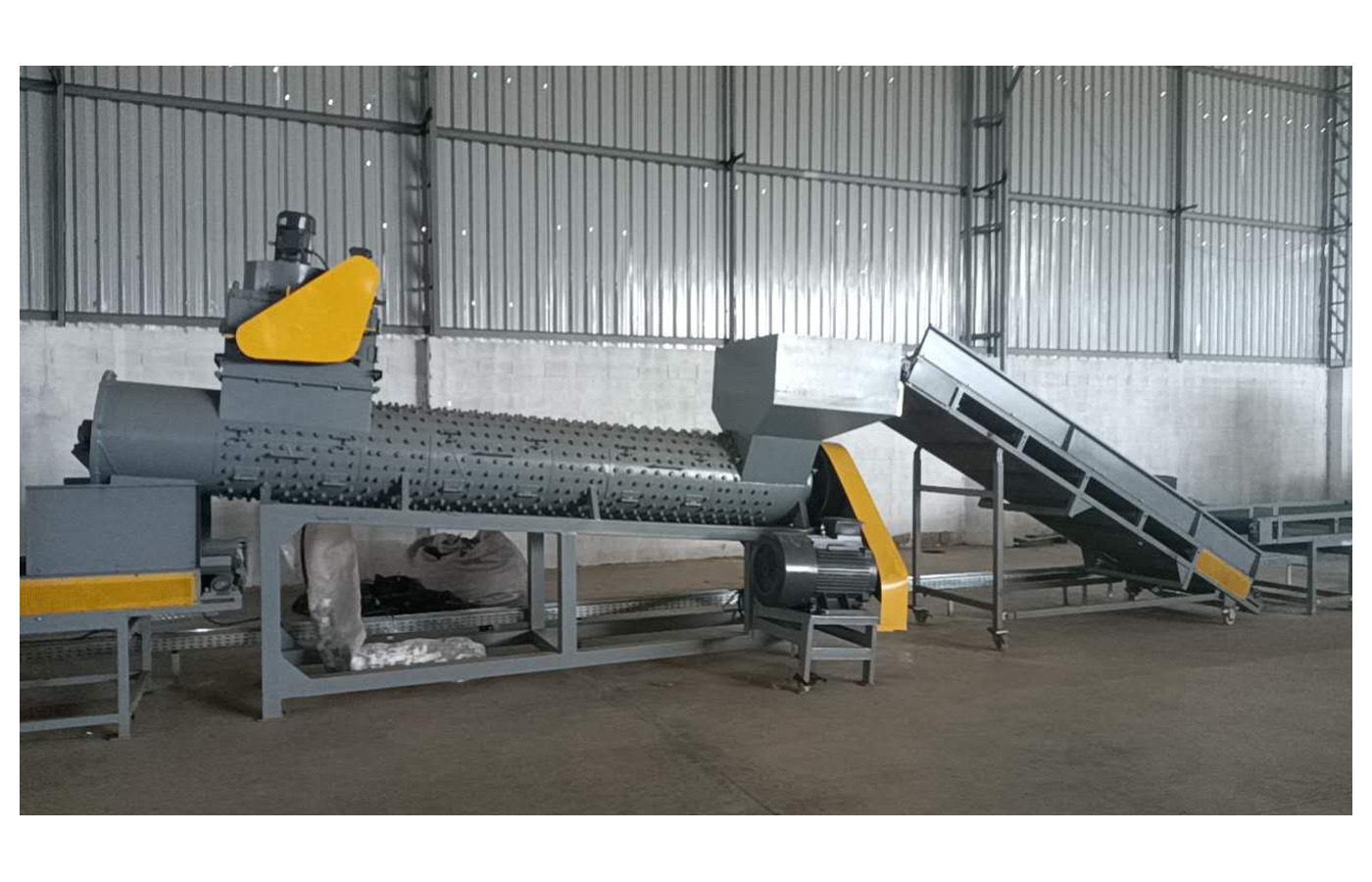
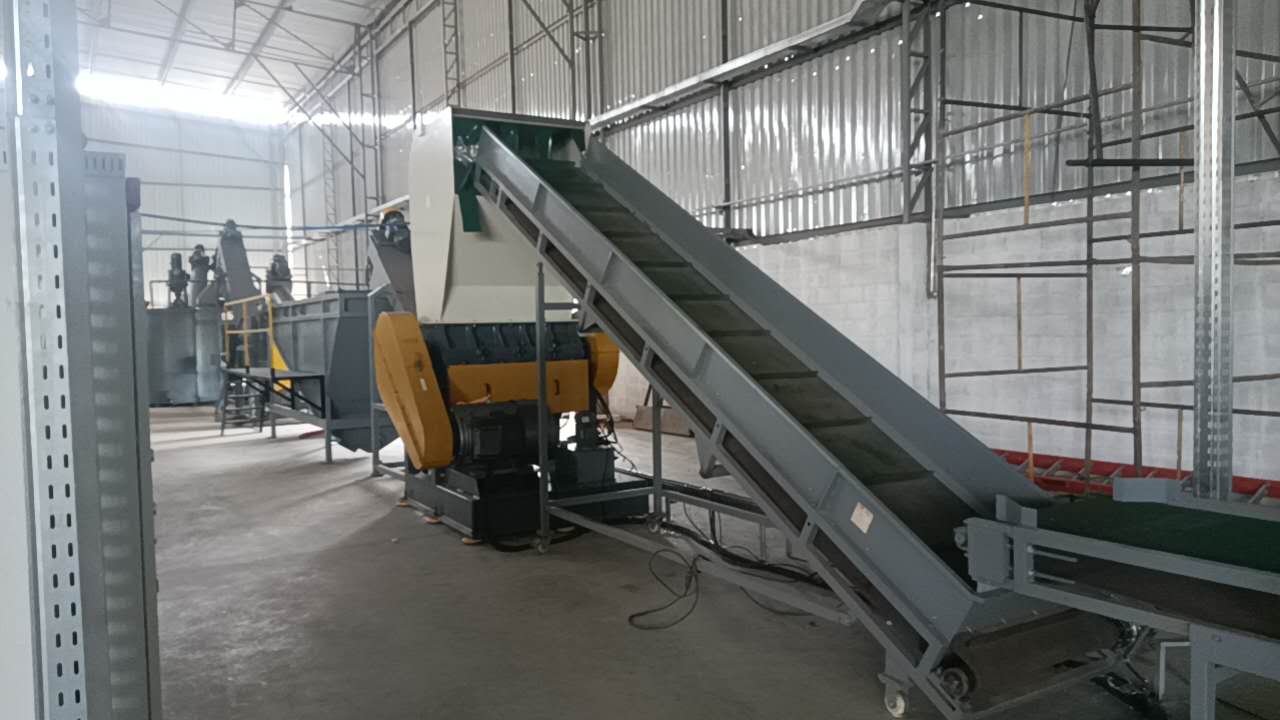
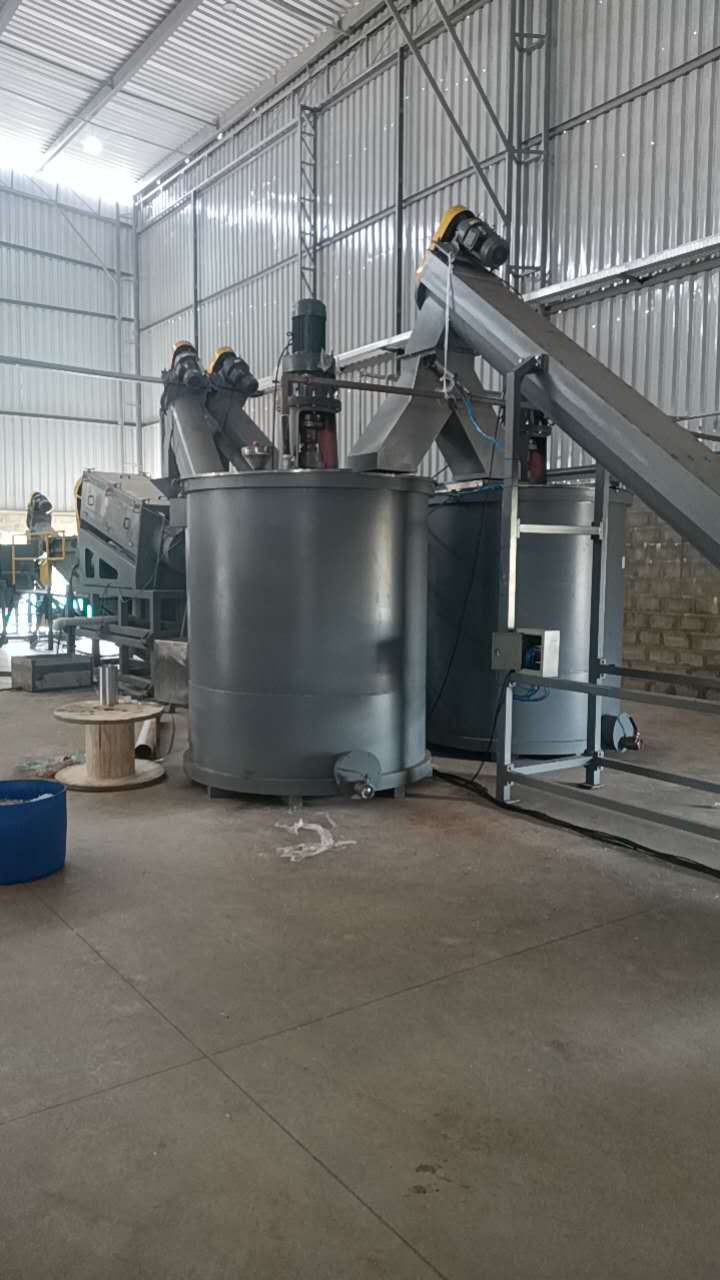
Real equipment photography
Captions identify visible equipment only; they do not extend customer, location, commissioning or performance claims.
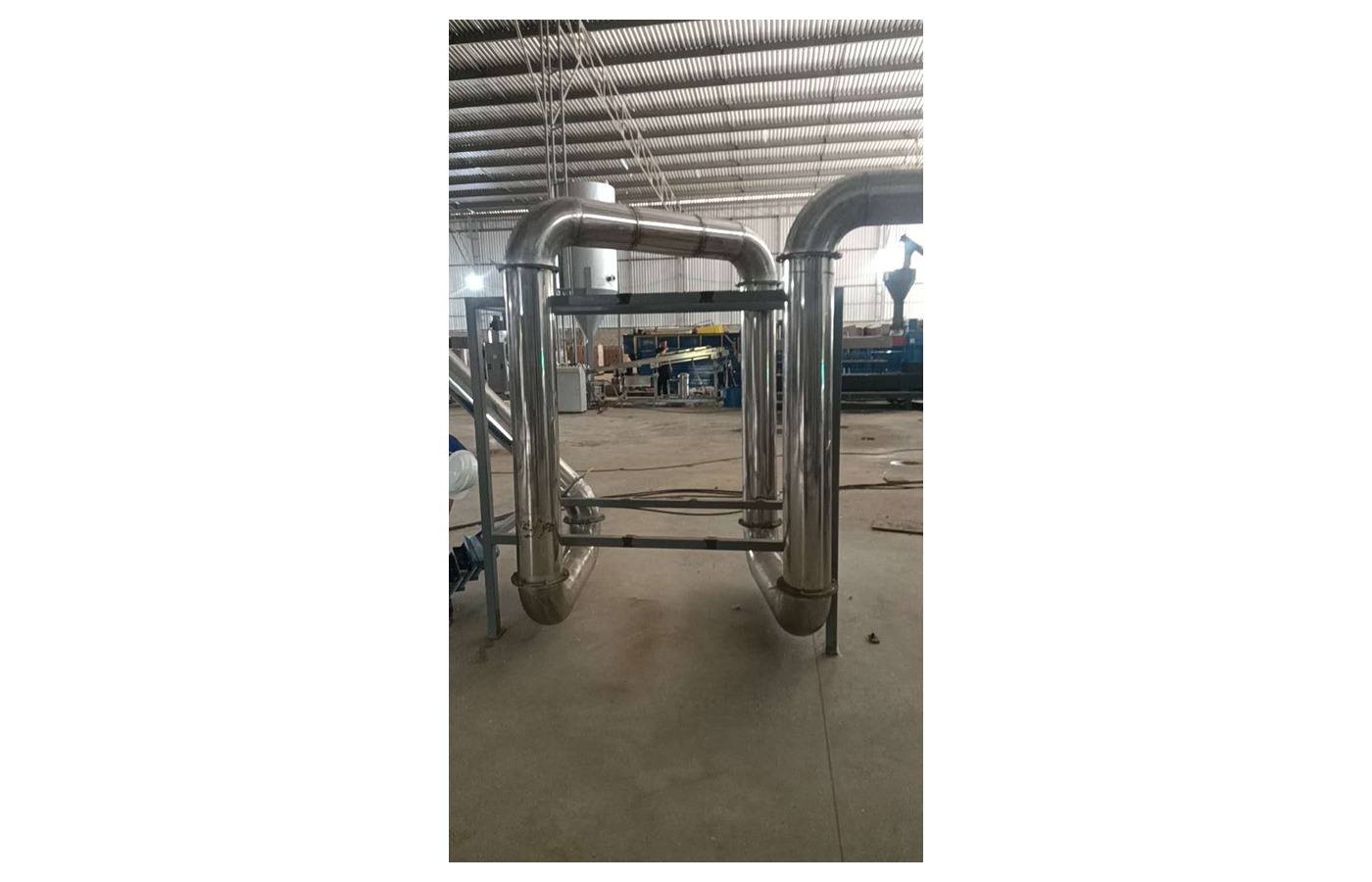
Reference configuration
These quantities describe the documented 1,000 kg/h reference project and support project discussion only.
Process and acceptance boundaries
Quality and acceptance depend on agreed feedstock conditions, sampling, test methods and the approved project configuration.
Sort, wash, separate, dewater and dry post-consumer PET bottles into flakes prepared for the agreed downstream route.
Suitable flakes may move into a separately engineered extrusion and pelletizing process. It is not evidence of washing-line performance.
SSP may be required by the downstream route, but it is not part of the documented 32-node washing flow.
Published URIDGE pages
These links lead only to existing published pages. Their scopes remain separate from this reference configuration.
Current URIDGE washing-line category.
Downstream equipmentSeparate downstream IV-upgrading stage.
Downstream categoryPublished general pelletizing category.
Project referenceFiber-grade PET washing reference.
Project referencePET washing and pelletizing reference.
Project referencePublished washing, pelletizing and SSP project page.
Frequently asked questions
Define the project basis before finalizing equipment quantities or performance acceptance.
Share the feedstock source, bale or loose-feed condition, bottle color mix, labels and caps, contamination profile, required design capacity, target flake size, downstream route, utilities, site constraints and proposed acceptance method.
No. The 1,000 kg/h figure is the design capacity of one reference project. Actual configuration and acceptance depend on feedstock, operating basis, target quality, utilities and approved project design.
The documented layout places two hot-wash positions in sequence. Temperature, chemistry, residence time and dosing must be determined for the project.
Agree the sampling point, preparation method, test method, frequency, acceptance limits and reporting format before contractual acceptance.
Water demand is project-specific. Makeup water, circulating flow and discharge are separate quantities calculated from the approved process, recovery concept, feedstock and local constraints.
Not on the basis of the washing line alone. Any assessment requires a complete, market-specific evidence package covering the process chain, material controls, validation and responsible entities.
Depending on the intended product, qualified flakes may move to a separate pelletizing process and, where required, a separately engineered SSP process.
Start with your material and target flakes
Send representative feedstock information, planned throughput and schedule, target flake requirements, utilities, site dimensions and proposed acceptance method.