1
Feedstock assessment
Material basis
PET form → starting IV → moisture → contamination and preparation review
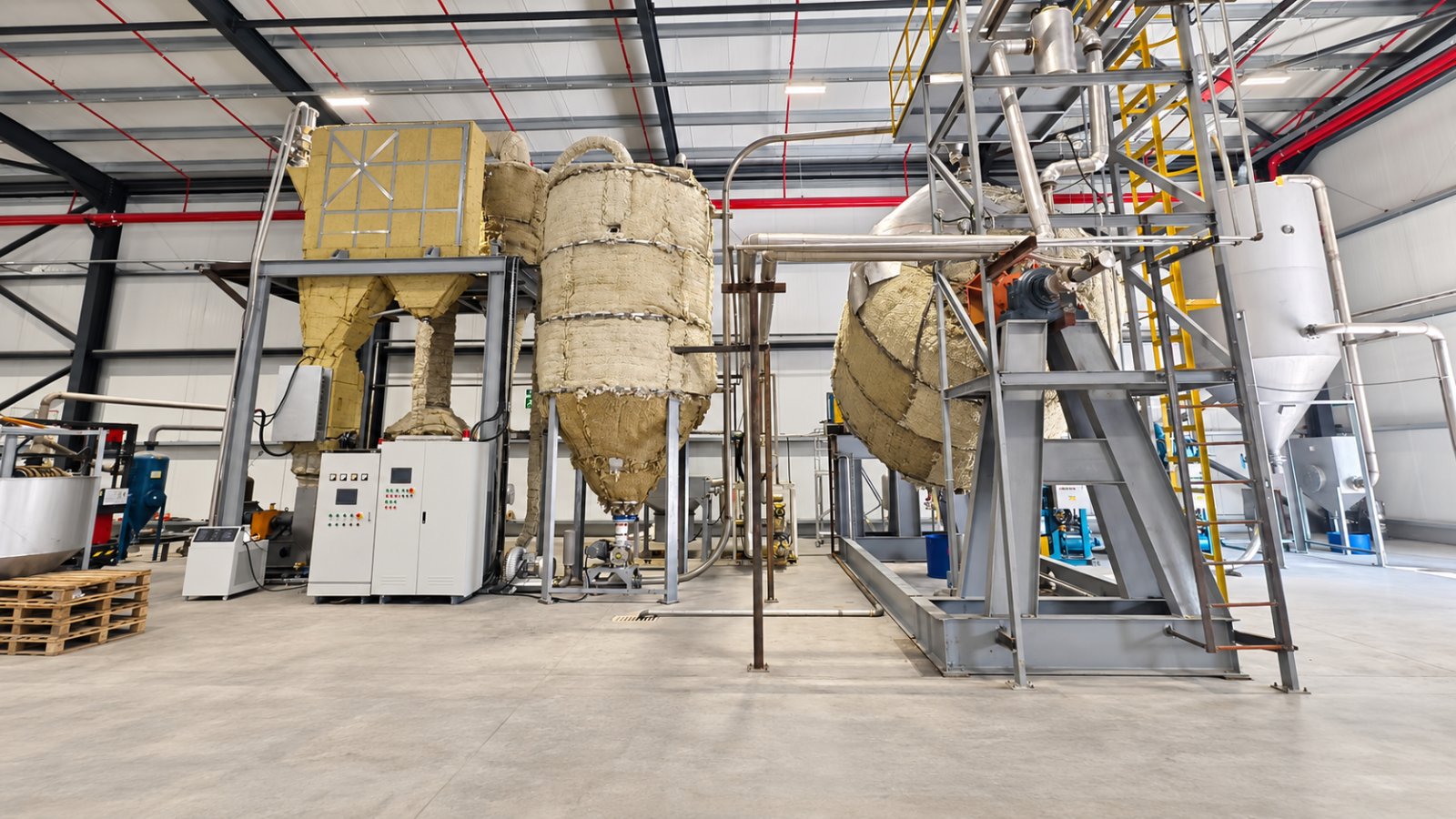
PET Recycling SSP System
Configure solid-state polycondensation equipment around the incoming PET form, starting and target IV, moisture condition, process atmosphere, batch requirement, utilities and agreed acceptance testing.
Project-specific configuration
SSP performance begins with the actual feedstock. The system and recipe should follow verified material data rather than a generic capacity or IV promise.
Configurable process route
This sequence explains the process logic. Final equipment quantities and residence time follow the approved project process and operating recipe.
Material basis
PET form → starting IV → moisture → contamination and preparation review
When required
Pre-crystallize suitable PET and reduce moisture before the SSP reaction stage
Thermal basis
Bring prepared PET to the approved solid-state process temperature without melting
Managed atmosphere
Hold the material under the selected vacuum or nitrogen conditions for the defined residence time
Material handling
Cool, discharge and transfer the treated PET under the approved handling procedure
Acceptance basis
Take representative samples and verify IV and other agreed parameters using the specified method
A standalone rotary drum and an integrated pre-crystallization-plus-SSP line are different project configurations. Neither route should be selected without confirming the starting material and target application.
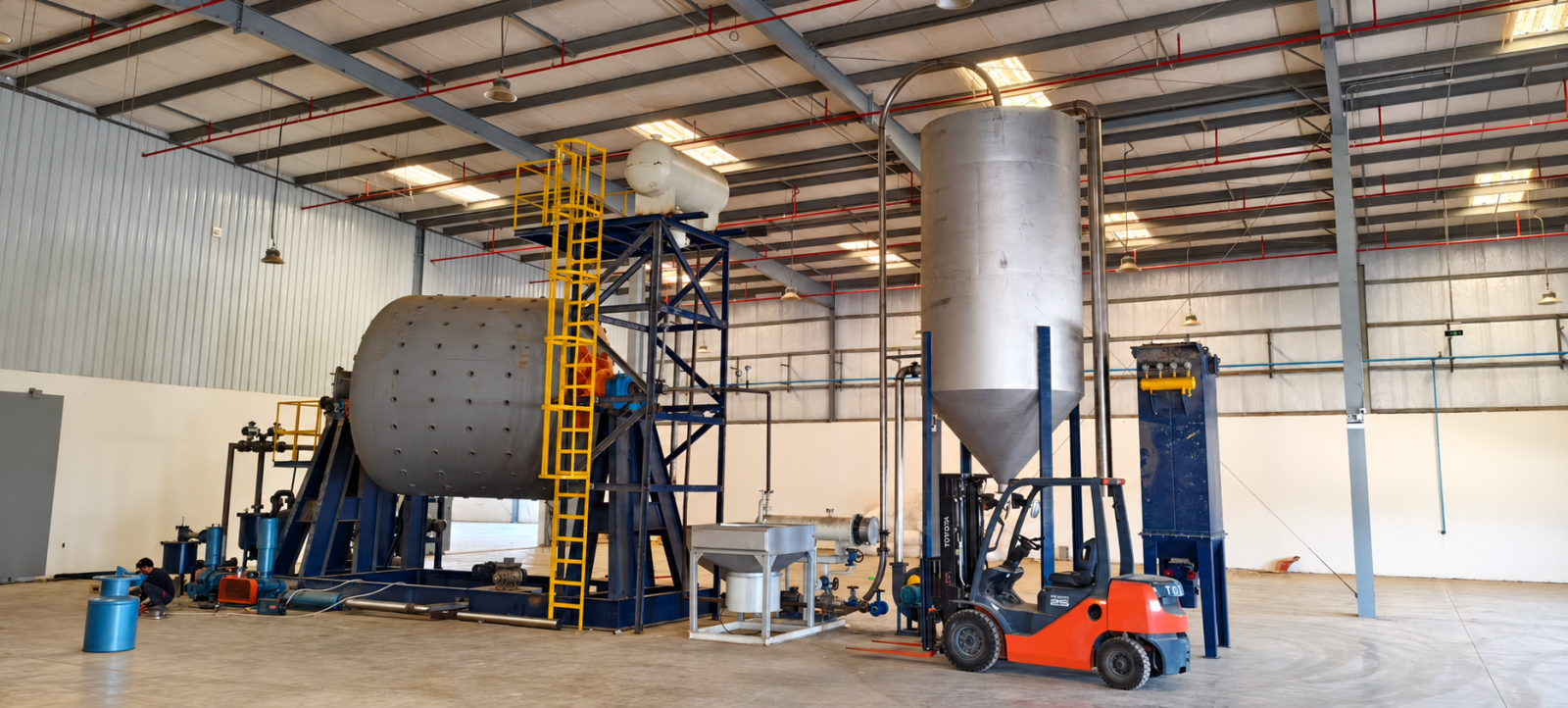
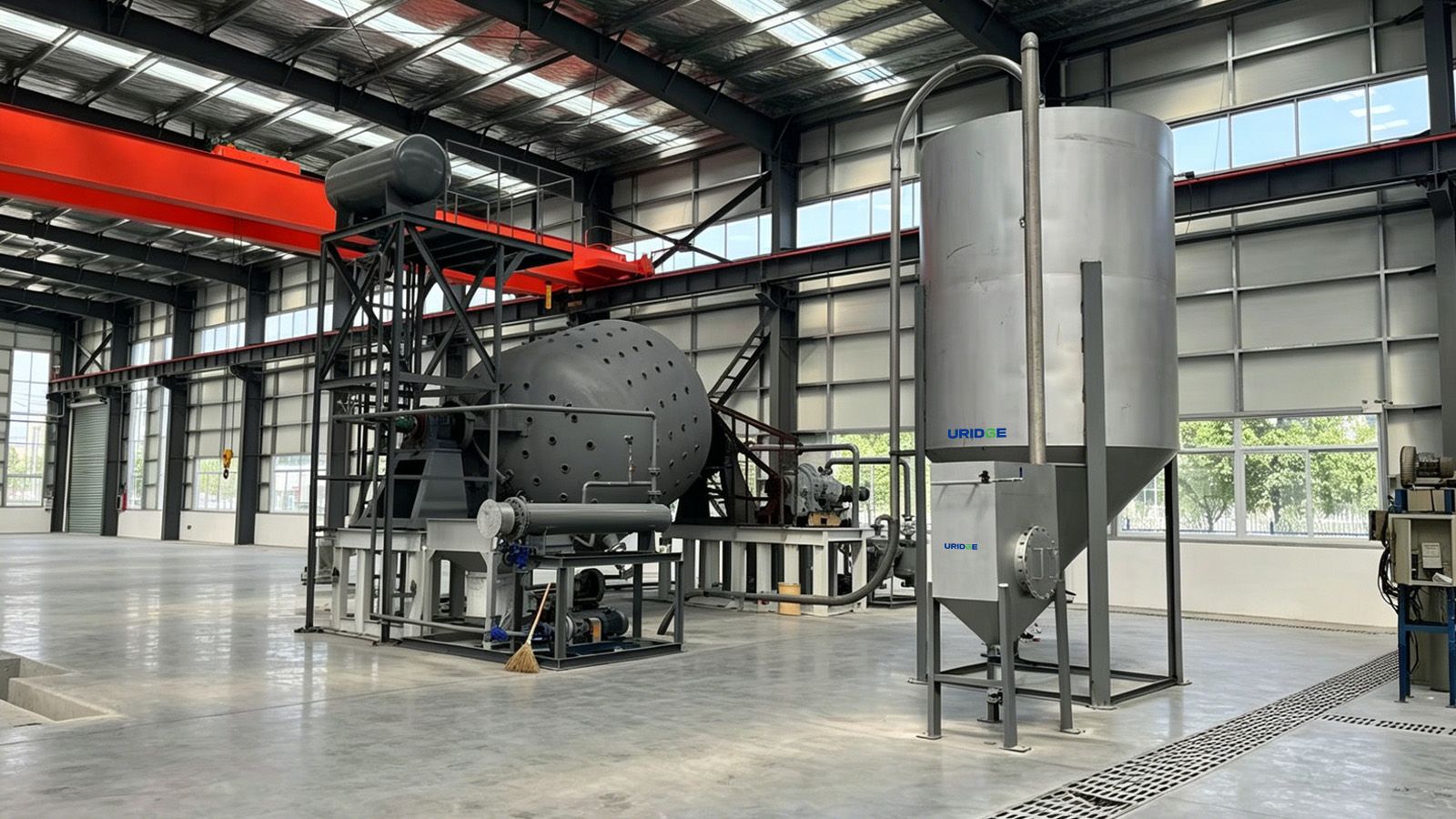
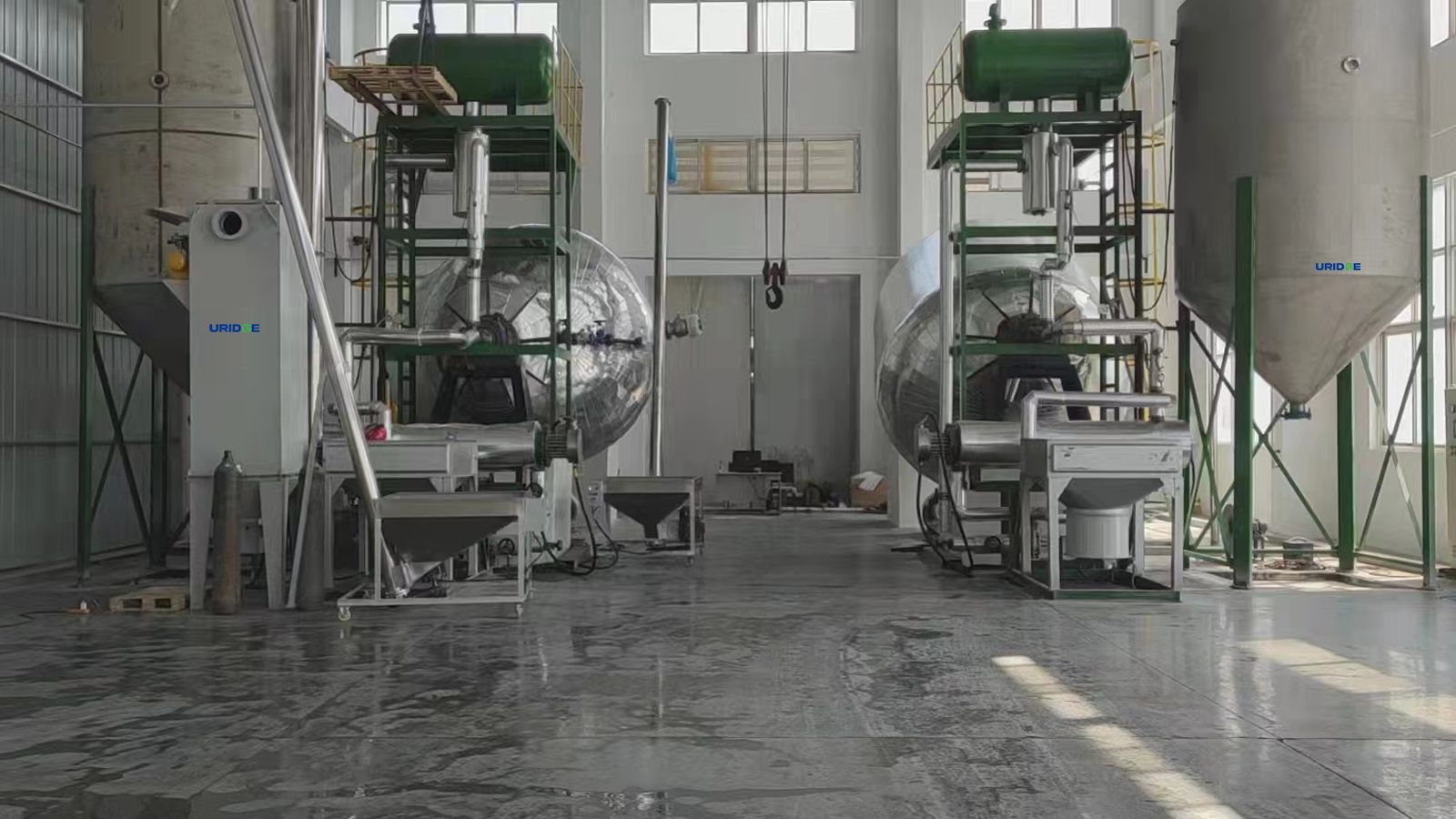
Published project photography
These photographs come from existing URIDGE project pages. Captions identify the published installation context and do not turn reference-project values into general guarantees.
Reference projects
The figures below describe two documented 2026 installations. A new project requires its own material assessment, recipe and acceptance basis.
Claim and process boundaries
The SSP stage is one part of a larger PET recycling and conversion chain. Its scope must be described precisely.
Washing quality, contamination control, moisture, crystallinity and starting IV influence SSP stability and the achievable result.
Target IV requires an agreed recipe and laboratory method. Reference-project values do not automatically apply to other materials.
Preform, sheet, fiber, strapping and engineering applications have their own material and processing requirements.
Published URIDGE pages
These links lead only to existing published pages. Each page retains its own scope and evidence boundary.
Current URIDGE SSP category page.
Upstream equipmentSeparate bottle-to-flake preparation stage.
Related categoryPublished pelletizing category and equipment routes.
Project referenceIntegrated 2026 yarn-grade reference project.
Project referenceStandalone 2026 rotary-drum reference project.
Project referencePublished Indian project page.
Frequently asked questions
Confirm the material and test basis before committing to capacity, residence time, energy or final IV.
Provide the PET form and source, starting IV, target IV, IV test method, moisture, crystallinity, contamination data, batch or throughput requirement, downstream use, utilities and proposed acceptance method.
Some projects can be engineered for suitable PET flakes, pellets or chips, but material handling, preparation and the operating recipe must be confirmed for the actual feedstock.
No. It depends on the PET condition, process route and project objectives. The published Bursa system includes a separate pre-crystallization and drying stage, while the Rabigh reference uses a standalone rotary drum configuration.
No universal value should be promised. IV 1.10 dL/g is the documented target of the Bursa yarn project. A new target depends on starting material, moisture, recipe, residence time and the agreed test method.
No. Approximately 260 kWh/t is a published reference estimate under specific project conditions. Actual energy depends on starting and target IV, preparation, loading, utilities, insulation and operating recipe.
Not by itself. Food-contact assessment requires evidence for the complete process chain, feedstock controls, validation testing, applicable regulations and responsible parties.
Agree the sampling point, sample preparation, laboratory method, frequency, limits, operating conditions and reporting format before contractual acceptance.
Start with your PET and target IV
Send representative material information, starting and target IV, moisture data, expected production basis, downstream application, utilities and preferred acceptance method.