Plastic Pelletizing Lines
URIDGE builds plastic pelletizing lines that convert recycled plastic waste into reusable pellets. Because rigid and light, low-bulk-density materials have different feeding characteristics, we offer two dedicated solutions: a Waste Rigid Pelletizing Line for HDPE and PP bottles, pipes and injection-molded scrap, and a Compaction Pelletizing System for film, woven bags, fiber and other low-bulk-density waste. Each line is configured to your material, output target and final pellet application.
Overview
A plastic pelletizing line melts, filters and re-forms recycled plastic into uniform pellets that can re-enter production. The right configuration depends heavily on the form of the feedstock: rigid plastic waste and light, low-bulk-density materials have different feeding characteristics, and therefore require different feeding and pelletizing setups. Light, bulky materials such as film and fiber tend to bridge and feed unevenly in a standard hopper, which is why they are compacted before extrusion, while denser rigid scrap is handled with a different setup. URIDGE offers two dedicated solutions for these feedstock types rather than one generic machine: a Waste Rigid Pelletizing Line and a Compaction Pelletizing System. Both produce reusable pellets; the difference is how the material is fed, melted and cut to suit its form.
Our Plastic Pelletizing Solutions
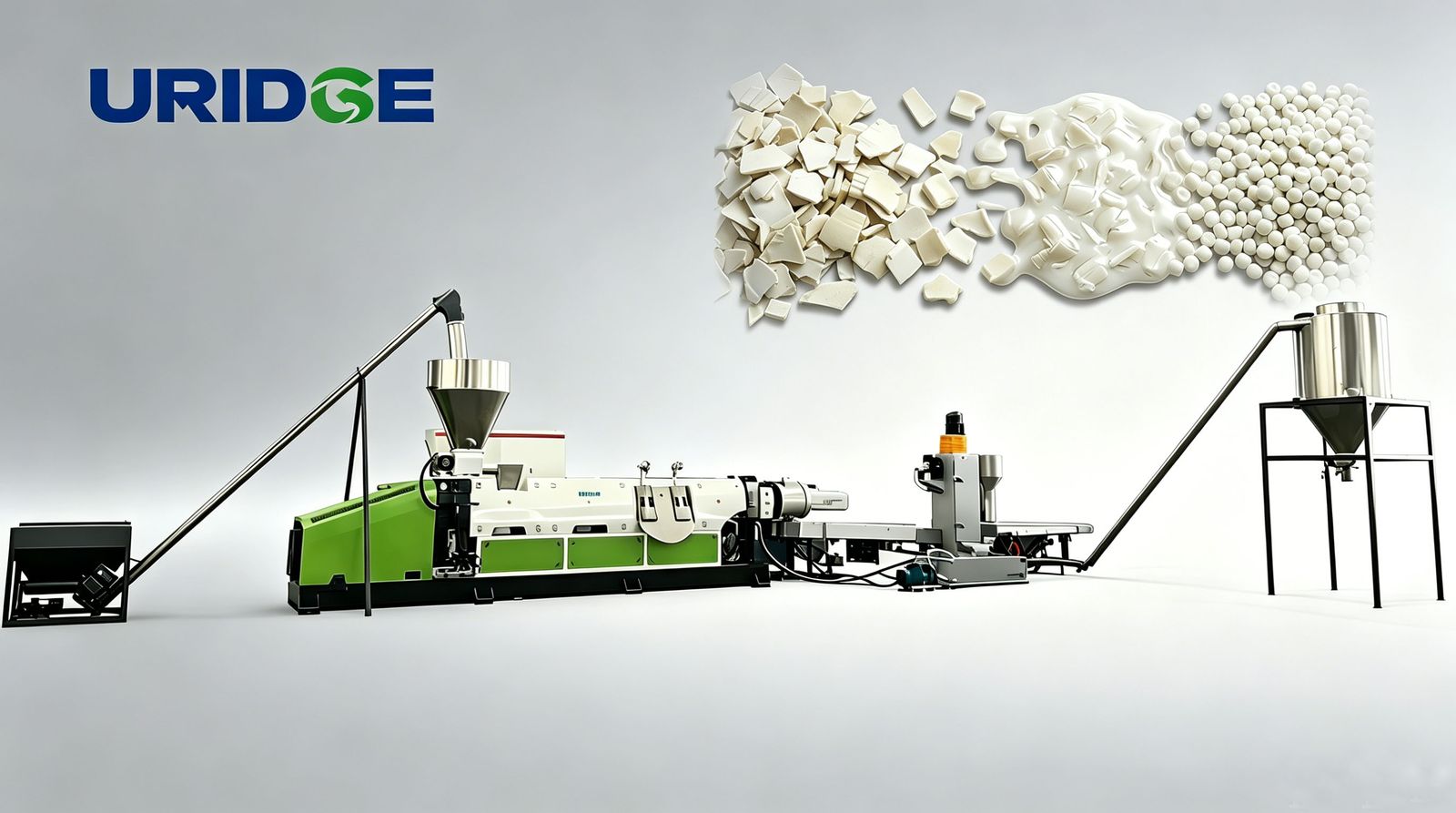
Waste Rigid Plastic Pelletizing Line
A dedicated line for rigid plastic recycling. HDPE and PP rigid waste — bottles, pipes and injection-molded scrap — is processed into uniform recycled pellets, with PLC touchscreen control and real-time monitoring of current, pressure and energy, including per-ton electricity cost tracking.
Best for: Recyclers processing HDPE and PP rigid plastic waste into reusable pellets.
Materials: HDPE and PP rigid plastic waste, including bottles, pipes and injection-molded scrap.
Explore the rigid plastic pelletizing line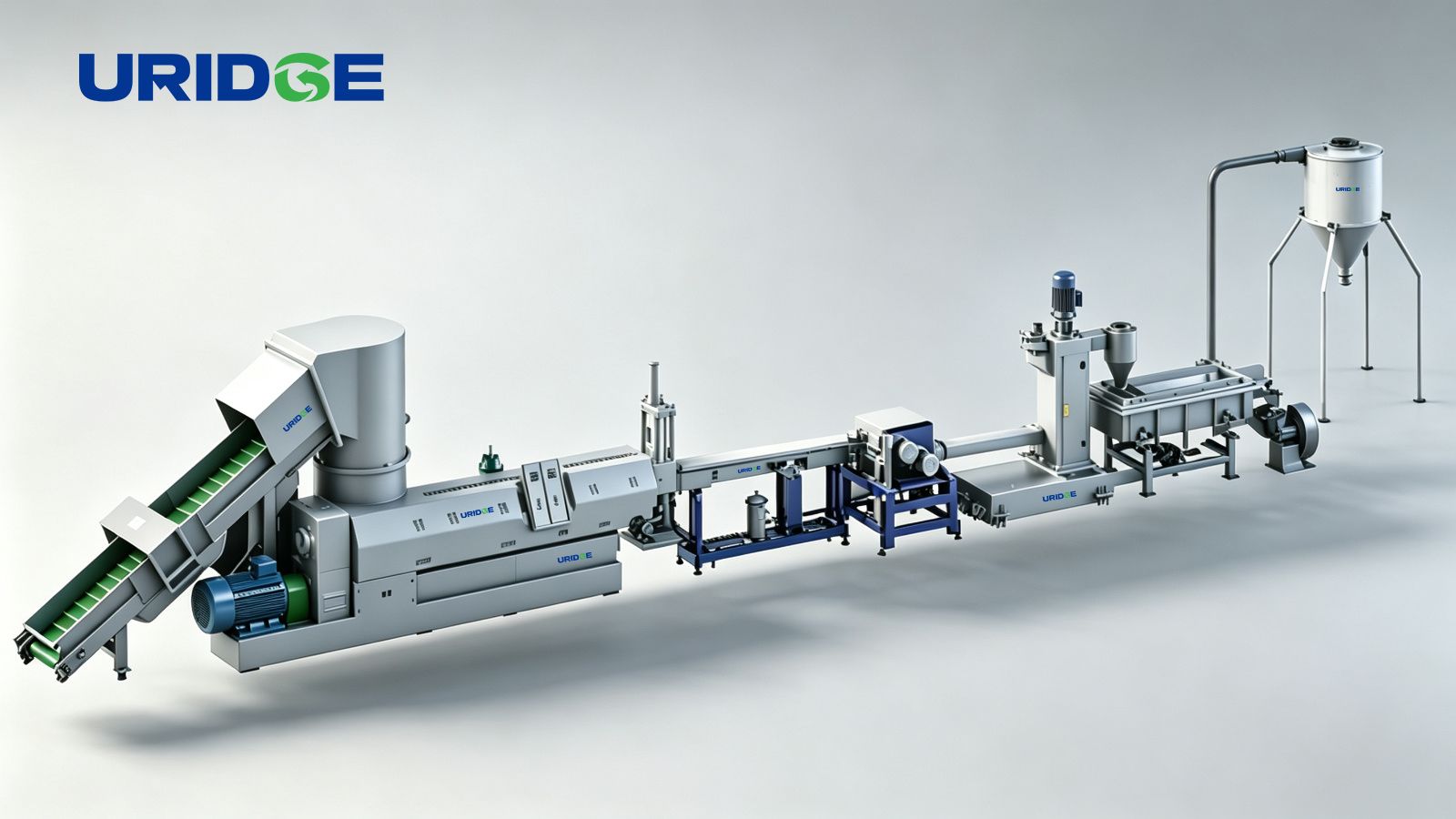
Compaction Pelletizing System
A pelletizing system with an integrated compaction chamber that improves stable feeding of light, bulky materials, reducing the bridging and feeding difficulty common with film and fiber. It can be configured with water ring, water strand or water flush strand pelletizing, and is available in multiple URCS configurations — model specifications are provided on the product page.
Best for: Recyclers handling film, woven bags, fiber and other low-bulk-density materials that are difficult to feed through a standard hopper.
Materials: Plastic film (LDPE, HDPE, PP and agricultural film), PP woven bags, FIBC bulk bags, PET fiber and spinning waste, non-woven scrap, and foam or fluff.
View the compaction pelletizing system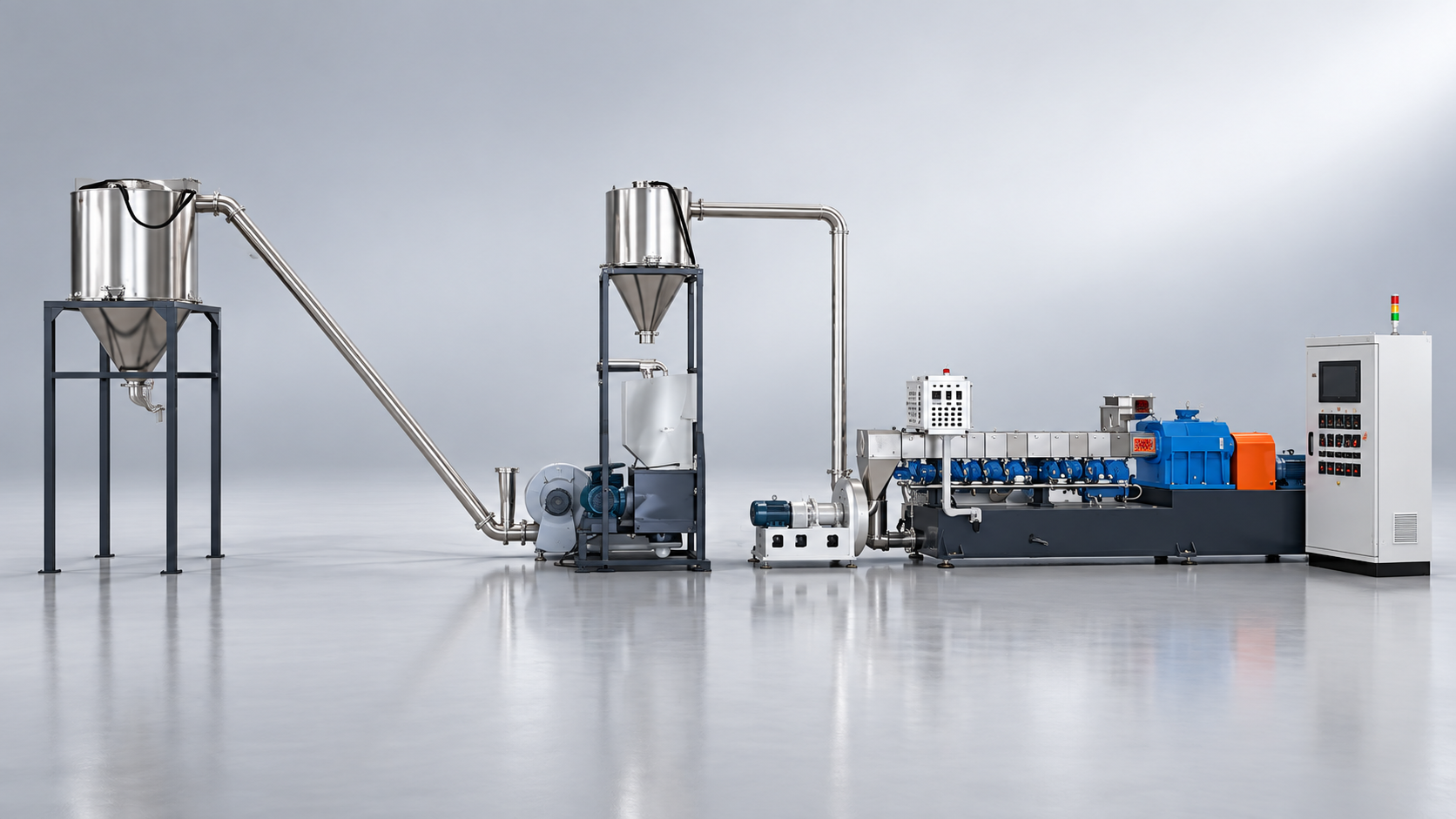
WPC Pelletizing Line for Wood-Plastic Compounds
A WPC compounding and pelletizing line for PE- or PVC-based formulations blended with wood flour or other suitable plant-based fillers.
Best for: WPC manufacturers preparing compound granules for downstream wood-plastic profile and product extrusion.
Materials: PE or PVC + wood flour / plant-based fillers
View WPC pelletizing lineMaterials & Applications
URIDGE plastic pelletizing lines process two broad families of feedstock, each matched to its own feeding setup and downstream pellet applications.
A. Rigid plastic waste
- Materials: HDPE and PP rigid plastic waste
- Typical forms: bottles, pipes and injection-molded scrap
- Recycled pellet applications: plastic pipes and fittings, injection-molded products, film and sheet extrusion, industrial packaging materials, and construction materials
B. Film, woven, fiber and other light materials
- Materials: LDPE, HDPE and PP film and agricultural film; PP woven bags, FIBC bulk bags and woven fabric scrap; PET fiber waste, spinning waste and non-woven scrap; foam and fluff
- Typical form: light, low-bulk-density material, compacted before extrusion
- Recycled pellet applications: film and sheet extrusion, injection-molded products, woven bags and fabrics, pipes and profiles, and strapping and industrial tapes
How We Configure a Plastic Pelletizing Line
A pelletizing line is configured to the material you process and the pellets you want to make, rather than taken from a fixed catalog. To recommend the right solution, we ask for:
- Material type — rigid plastic waste (HDPE, PP) or light materials such as film, woven bags and fiber
- Feedstock form — bottles, pipes or injection-molded scrap, versus film, fluff or other low-bulk-density material
- Condition of the feedstock, such as contamination level — please share what you know, so we can size the line
- Target output
- Preferred pelletizing method, where applicable — water ring, water strand or water flush strand
- Final application of the recycled pellets
- Plant layout or available space
Because rigid and light materials behave differently, the feeding and pelletizing setup changes with the feedstock. Compaction Pelletizing Systems are available in multiple URCS configurations, and detailed model specifications are provided on the Compaction Pelletizing System product page.
Why Choose URIDGE
URIDGE has built plastic recycling and extrusion equipment since 2008, with 18+ years of manufacturing experience, 500+ customers and equipment serving 50+ countries. Each project is delivered as a customized solution — process and equipment design, manufacturing, assembly and performance testing, packing and logistics, and on-site installation and commissioning, backed by global after-sales support. A complete HDPE rigid pelletizing line designed, shipped and commissioned for a customer in Lima, Peru is one example. URIDGE works under ISO9001 quality management and CE certification.
Featured Projects
Planning a plastic pelletizing line?
Tell us your material, its form, expected output and final pellet application — URIDGE will recommend the appropriate pelletizing solution and configuration.