Plastic Pelletizing Line
WPC Pelletizing Line for Wood-Plastic Compounds
URIDGE builds WPC pelletizing lines for PE- or PVC-based wood-plastic compounds, using counter-rotating parallel twin-screw extrusion at 100–800 kg/h.
- Turnkey design & installation
- ISO9001 / CE certified
- 24/7 global after-sales support
Product Overview
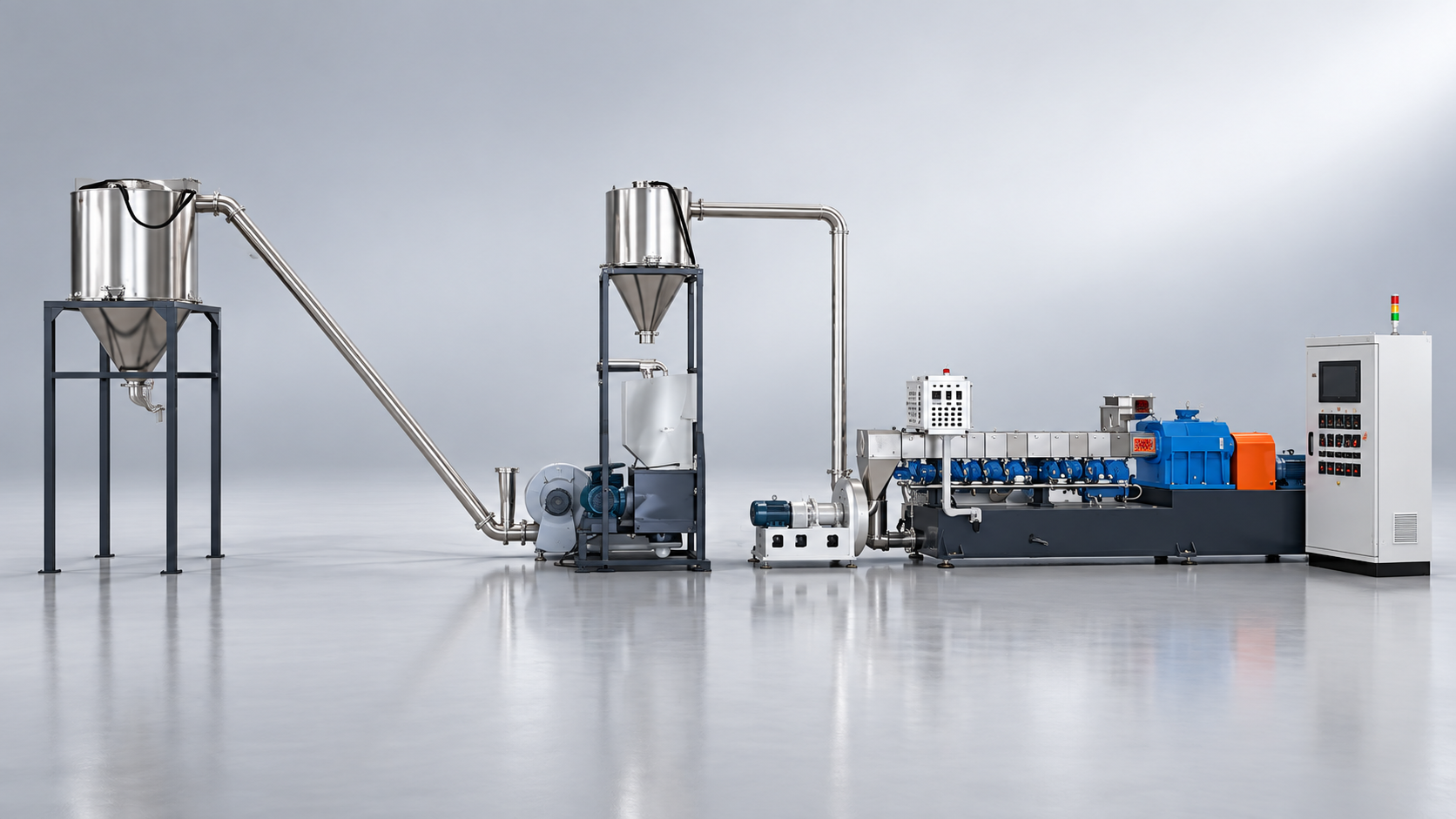
The URIDGE WPC Pelletizing Line is an independent wood-plastic compounding and pelletizing system. It processes wood-plastic compounds based on a PE or PVC plastic matrix blended with wood flour, starch, straw powder or other suitable plant-based fillers through compounding, degassing, coarse cutting and crushing, producing WPC compound granules (wood-plastic compound pellets).
This line is intended for WPC extrusion factories and wood-plastic composite manufacturers preparing compound granules for downstream profile and product extrusion. It is a dedicated WPC compounding line rather than a general waste-plastic recycling pelletizing line.
Raw Materials
Suitable material systems include:
- PE + wood flour
- PVC + wood flour
- PE or PVC + starch
- PE or PVC + straw powder
- Other suitable wood-plastic compound formulations
The specific formulation and filler ratio are defined by the customer’s own compound recipe.
High-Speed Premixing
Before pelletizing, the plastic resin, wood flour or other filler, and formulation components must be thoroughly premixed. A high-speed mixer is used upstream to prepare a uniform blend before screw feeding.
Production Process
The confirmed process flow is:
Pre-Mixed WPC Compound → Screw Feeding → Counter-Rotating Parallel Twin-Screw Extrusion → Vacuum Degassing → Cutting into Coarse Agglomerates → Pneumatic Conveying → Crushing → Pneumatic Conveying → Storage.
Screw Feeding
The screw feeder continuously transfers the premixed wood-plastic compound into the twin-screw extruder.
Main Extruder
A counter-rotating parallel twin-screw extruder is used as the main compounding machine. The screw system mixes the plastic matrix and wood-based filler to form a more uniform wood-plastic compound.
Vacuum Degassing
A vacuum system removes moisture, gases and volatile components generated during processing.
Cutting and Crushing
After extrusion, the compounded material is not formed directly into regular small pellets. A cutting system first cuts the melt into irregular coarse agglomerates, typically around thumb size. These coarse agglomerates are conveyed by pneumatic conveying to a crusher, which reduces them into smaller final WPC compound granules. A second pneumatic conveying stage then transfers the granules to the storage silo.
Final Product
The finished product is WPC compound granules, also described as wood-plastic compound pellets. Because the granules already contain wood flour or plant-based filler, they are referred to as WPC compound granules rather than plain plastic pellets.
Standard Line Configuration
A typical line includes:
- Screw Feeding System
- Counter-Rotating Parallel Twin-Screw Extruder
- Vacuum Degassing System
- Cutting Unit
- Pneumatic Conveying System
- Crusher
- Final Pneumatic Conveying System
- Storage Silo
A high-speed mixing system is required upstream to prepare the compound before pelletizing.
Production Capacity
Typical production capacity: 100–800 kg/h. Actual output depends on the plastic base material, filler type, formulation, bulk density and machine configuration.
Automation and Control
The line can be equipped with a Siemens PLC and an HMI operator interface. PID automatic temperature control and adaptive temperature control are used for extrusion temperature management. The control system can include main-motor overcurrent protection, overvoltage protection, recipe storage and a network communication module.
Remote monitoring and diagnostics can be supported when required, and remote program adjustment is carried out only with customer authorization.
Flexible Configuration
The line is based on a standardised platform and accepts flexible configuration. Set-up can be adjusted according to the plastic base material, wood flour or plant filler type, compound formulation, required output, factory layout, voltage and frequency, automation level and downstream WPC production requirements.
Pellet and Granule Quality
The system is designed to produce stable WPC compound granules with controlled particle size and consistent compound quality. Final granule quality depends on raw-material preparation, formulation, moisture condition, compounding settings and downstream crushing.
Factory Testing
The production line is tested with material before shipment. Customers can provide their own wood-plastic formulation for trial production so that machine configuration and processing conditions can be evaluated before delivery.
Installation and Technical Support
URIDGE provides installation, commissioning, operator training, remote technical support and spare-parts support.
- Warranty period: 1 year
- Typical production lead time: approximately 2 months
- Typical installation period: approximately 1 week
Before installation, customers should prepare a level floor and ensure that electricity, water, supporting personnel and operators for training are available. During machine configuration, locally common and easy-to-maintain components can be considered.
Project Experience
URIDGE has supplied WPC pelletizing equipment to customers in markets including the Middle East, Argentina and Russia. These lines prepare wood-plastic compound granules for downstream WPC extrusion applications.
Frequently Asked Questions
What materials can the WPC pelletizing line process?
The line is designed for PE- or PVC-based compounds mixed with wood flour, starch, straw powder or other suitable plant-based fillers.
Does the material need to be mixed before pelletizing?
Yes. The raw materials must be thoroughly premixed in a high-speed mixer before entering the pelletizing line.
What type of extruder is used?
The main machine uses a counter-rotating parallel twin-screw extruder for compounding the plastic matrix and wood-based filler.
What is the available production capacity?
Typical production capacity ranges from approximately 100 to 800 kg/h, depending on the formulation and machine configuration.
What happens after extrusion?
The compounded material is first cut into coarse irregular agglomerates and then reduced into smaller WPC compound granules by a crusher.
Can customers provide their own formulation for testing?
Yes. Customers can provide their own material for trial production before shipment.
Tell Us About Your WPC Formulation
To configure a suitable WPC pelletizing line, please send us:
- Plastic base material
- Wood flour or filler type
- Approximate formulation
- Required production capacity
- Final downstream WPC product
- Local voltage and frequency
- Factory layout / available installation space
URIDGE will configure the twin-screw extruder and downstream equipment according to the customer’s actual formulation and production requirements. You can request a quote or use the WhatsApp contact on this page to start.
Technical Specifications
Detailed parameters (capacity, screw diameter, installed power, dimensions, voltage) are tailored to your material and output requirement.
Request Spec Sheet Get a QuoteRelated Products
Plastic Pelletizing Line
Waste Rigid Plastic Pelletizing Line
URIDGE builds rigid plastic pelletizing lines for HDPE, PP, ABS, PC and PA, with 100–1000 kg/h capacity and configurable filtratio…
View details
Plastic Pelletizing Line
Compaction Pelletizing System
URIDGE builds compaction pelletizing systems for film, woven bags, PET fiber and EPS foam, with 100–1,000 kg/h capacity and flexib…
View detailsReady to Upgrade Your Production Line?
Contact us today for a free consultation and a tailored solution.