Rabigh, Saudi Arabia
16 m³ PET SSP System for Recycled Flakes and Pellets – Rabigh, Saudi Arabia
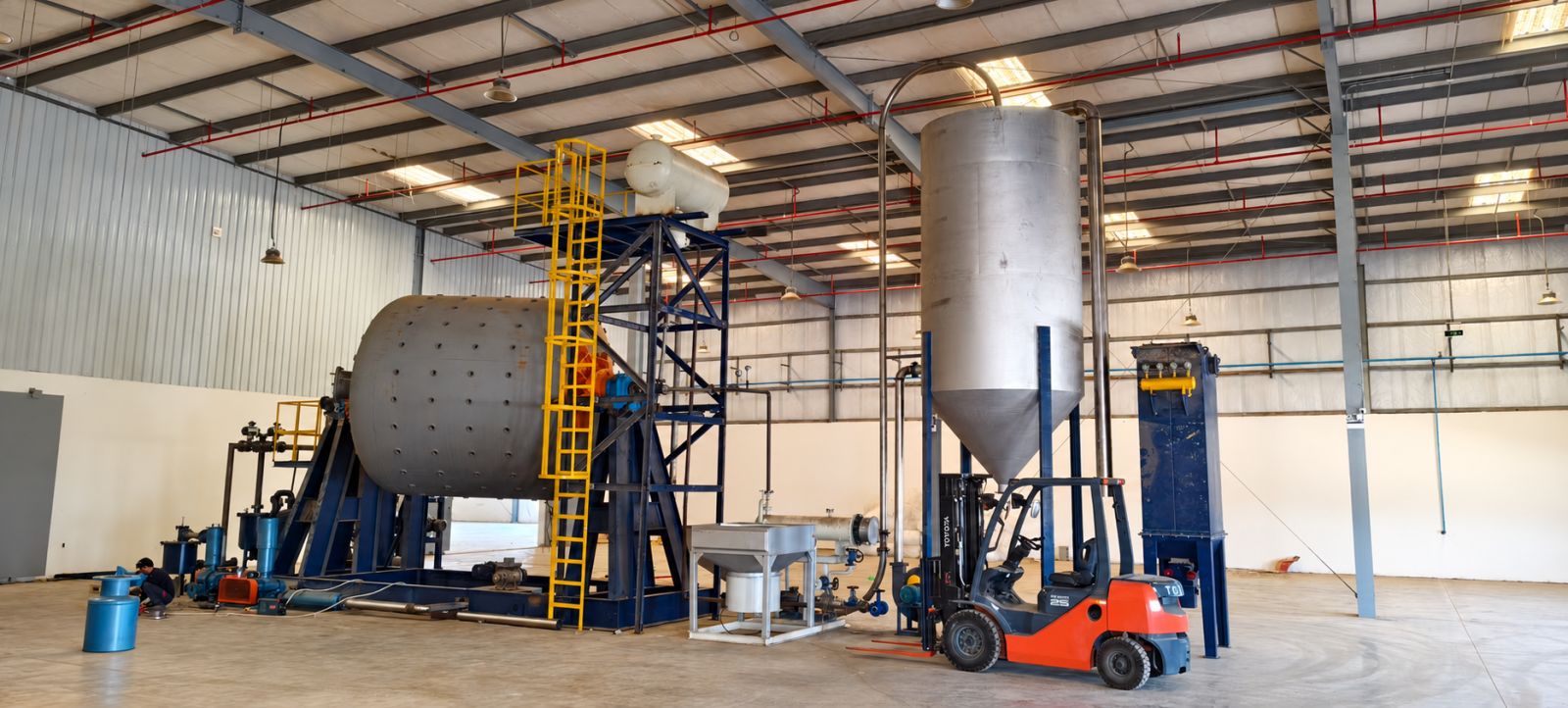
Equipment Supplied
16 m³ Rotary Drum PET Solid-State Polycondensation (SSP) System
Project Overview
URIDGE supplied a 16 m³ rotary drum PET solid-state polycondensation (SSP) system for a PET recycling and materials-upgrading project in Rabigh, Saudi Arabia. The installation is designed to increase the intrinsic viscosity (IV) of recycled PET bottle flakes and recycled PET pellets, helping the customer convert lower-IV material into feedstock for higher-value downstream applications.
The system was installed and commissioned in August 2026. Unlike a configuration with a separate upstream pre-crystallization and drying line, this project uses a standalone 16 m³ rotary SSP system. The process parameters are selected around the incoming PET condition, target IV and final application.
Project Requirements
The customer required an industrial SSP solution for increasing the intrinsic viscosity of recycled PET flakes and pellets. The system needed to provide controlled heat treatment, reliable material handling and an energy-conscious operating design for PET material upgrading.
Intrinsic viscosity is a key property for PET processing because it is related to molecular weight and influences the material's strength and suitability for further conversion. By increasing IV through solid-state polycondensation, recycled PET can be prepared for more demanding end uses than untreated low-IV material.
Main Project Specifications
| Project Location | Rabigh, Saudi Arabia |
|---|---|
| Customer Application | PET recycling and material viscosity upgrading |
| Raw Material | Recycled PET bottle flakes and recycled PET pellets |
| Equipment Type | Rotary drum PET solid-state polycondensation system |
| SSP Drum Volume | 16 m³ |
| Pre-Crystallization System | Not included in this project configuration |
| Target IV Capability | Configured according to final application; up to 1.10 dL/g for suitable PET yarn applications |
| Estimated Specific Energy | Approximately 260 kWh/t under agreed project conditions |
| Installation and Commissioning | August 2026 |
How the 16 m³ PET SSP System Works
Solid-state polycondensation increases PET molecular weight while the material remains in the solid state, below its melting temperature. Recycled PET flakes or pellets are processed in the rotary drum under controlled thermal conditions and a managed process atmosphere. Over the required residence time, the reaction increases the intrinsic viscosity of the PET.
1. Material Preparation and Loading
Recycled PET flakes or pellets are evaluated and prepared according to their starting condition and the required final application. Because this project does not include a separate upstream pre-crystallization and drying system, the incoming material condition and operating recipe are particularly important to stable SSP operation.
2. Rotary Drum Viscosity Increasing Process
The material enters the 16 m³ rotary drum for controlled solid-state polycondensation. Drum rotation supports material movement and helps maintain more even exposure to the selected process conditions. Temperature, pressure or gas conditions, and residence time are controlled to meet the required IV target.
3. Upgraded PET Material
After the SSP process, the PET material has a higher intrinsic viscosity and can be directed to the customer's selected downstream process. The exact final IV is determined by the starting IV, feedstock quality, target application and agreed operating recipe.
Half-Pipe Thermal-Oil Heating Design
The URIDGE rotary drum uses a half-pipe thermal-oil heating structure. The thermal-oil channels are integrated with the drum shell to establish a defined oil-circulation path around the heated surface. This supports efficient heat transfer from the thermal oil to the drum body and then to the PET material.
Compared with conventional batch rotary SSP arrangements under comparable operating conditions, the half-pipe heating structure is designed to reduce electrical energy consumption by approximately 30%. For this project, the estimated specific energy requirement to reach the agreed target IV is approximately 260 kWh per tonne.
Actual energy use, residence time and final IV depend on the starting IV, moisture content, flake or pellet condition, loading quantity, utility conditions, insulation condition and operating recipe. The figures above describe this project's agreed conditions and are not a universal guarantee for every PET feedstock.
Typical IV Targets for Recycled PET
The required intrinsic viscosity depends on the downstream product. A PET SSP system can be configured for an IV around 0.84 dL/g for suitable bottle-preform applications or up to 1.10 dL/g for demanding yarn and spinning applications. URIDGE selects the process configuration according to the customer's material, target IV and product requirements.
Benefits of a Standalone Rotary SSP Configuration
- Focused PET upgrading: A dedicated 16 m³ rotary drum is configured for IV improvement of recycled flakes and pellets.
- Flexible final application: Process conditions can be selected around different downstream PET requirements.
- Efficient thermal transfer: The half-pipe thermal-oil structure supports controlled, uniform heat transfer through the drum shell.
- Industrial material handling: The system integrates material loading, drum processing, discharge and supporting process connections.
- Application-specific engineering: The final recipe and controls are matched to the incoming PET condition and the intended product.
URIDGE Equipment and Service Scope
- Process assessment for recycled PET flakes and pellets
- 16 m³ rotary drum PET SSP system
- Half-pipe thermal-oil heating and circulation structure
- Material loading, transfer and discharge connections
- Electrical control and process-monitoring system
- Equipment manufacturing, assembly and factory preparation
- On-site installation guidance and commissioning support
Installation and Project Result
The PET SSP system was installed and commissioned in Rabigh in August 2026. The completed installation provides the customer with a dedicated process for upgrading the intrinsic viscosity of recycled PET bottle flakes and pellets.
This Saudi Arabia project demonstrates a practical rotary-drum SSP option for PET recyclers and processors that need a standalone viscosity-increasing system without a separate front-end pre-crystallization and drying unit.
Related PET SSP Equipment
Learn more about the configurable URIDGE SSP Solid-State Viscosity Increasing Equipment for PET Recycling. Capacity, vessel volume, target IV and process configuration are selected according to the incoming PET material and the customer's downstream application.
Planning a similar line?
Discuss Your Project