Algiers, Algeria
1,000 kg/h PET Bottle Washing Line for Fiber Production – Algiers, Algeria
Equipment Supplied
1,000 kg/h PET Bottle Washing and Recycling Line for Fiber-Grade Flakes
Project Overview
URIDGE supplied a complete 1,000 kg/h PET bottle washing and recycling line to a PET fiber spinning manufacturer in Algiers, Algeria. The project was designed to convert post-consumer PET bottles into clean, processed PET flakes for the customer's downstream fiber production.
The equipment was ordered, installed and put into operation in 2017. This project represents one of URIDGE's PET recycling installations in North Africa and demonstrates a practical route from collected bottle waste to reusable flake feedstock for textile applications.
Customer Industry and Production Requirement
The customer operates in the PET fiber spinning industry. Its production process required a dedicated recycling system capable of preparing post-consumer PET bottles for downstream fiber manufacturing at a target throughput of approximately 1,000 kg/h.
For a spinning application, the washing stage must do more than reduce the bottle size. The process must also separate unwanted materials, remove surface contamination and prepare the PET flakes for stable downstream handling. The production line was therefore configured as an integrated washing and material-preparation system rather than a standalone crusher.
Main Project Specifications
| Project Location | Algiers, Algeria |
|---|---|
| Customer Industry | PET fiber spinning |
| Raw Material | Post-consumer PET bottles |
| Final Product | Clean PET flakes for downstream fiber production |
| Nominal Capacity | 1,000 kg/h |
| Process Scope | Bottle preparation, sorting, size reduction, washing, separation, rinsing, dewatering and flake collection |
| Project Year | 2017 |
From Waste PET Bottles to Clean Flakes
The PET bottle washing line was arranged to carry the material through a coordinated sequence of preparation and cleaning stages. Each stage supports the next one and helps produce a more consistent flake feedstock for the customer's spinning process.
1. Bottle Feeding and Preparation
Collected PET bottles are introduced into the line and prepared for continuous processing. Stable feeding helps avoid large surges of material and supports a more consistent throughput through the downstream equipment.
2. Sorting and Separation
Non-PET materials and visible contaminants are separated before and during processing. The exact sorting arrangement depends on the incoming bottle stream, its color composition and contamination level.
3. Size Reduction
The PET bottles are reduced into flakes that can be washed, separated and conveyed more efficiently. Controlled size reduction also prepares the material for the following cleaning stages.
4. Washing and Rinsing
The flake stream passes through washing and rinsing stages configured to remove surface dirt and residual contaminants. Process conditions are selected according to the incoming material and the quality required for downstream fiber production.
5. Dewatering and Flake Collection
After washing and rinsing, mechanical dewatering and the downstream handling system prepare the clean PET flakes for collection. The finished flakes can then be transferred to the customer's next production stage.
Installed Equipment at the Algiers Site
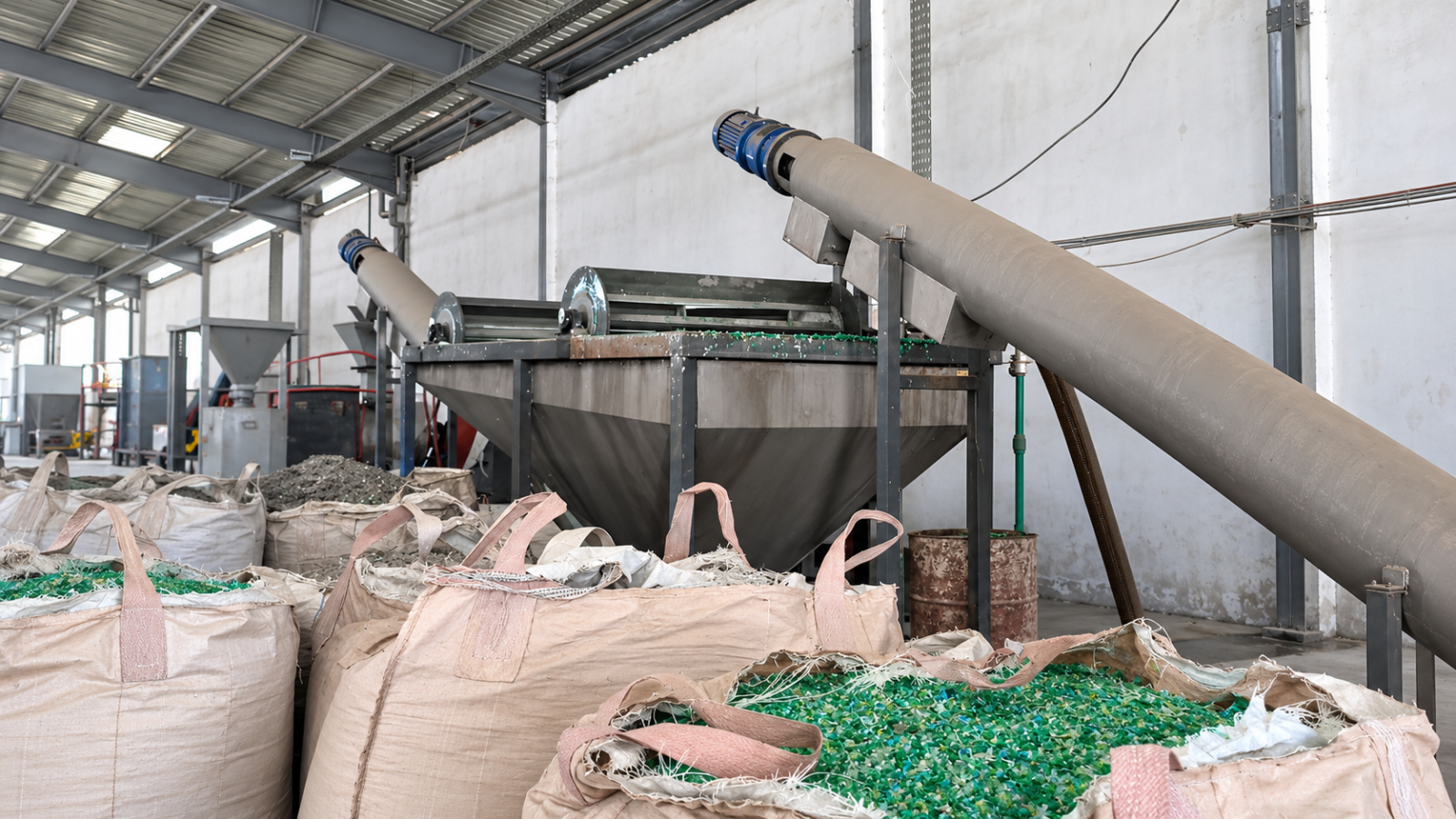
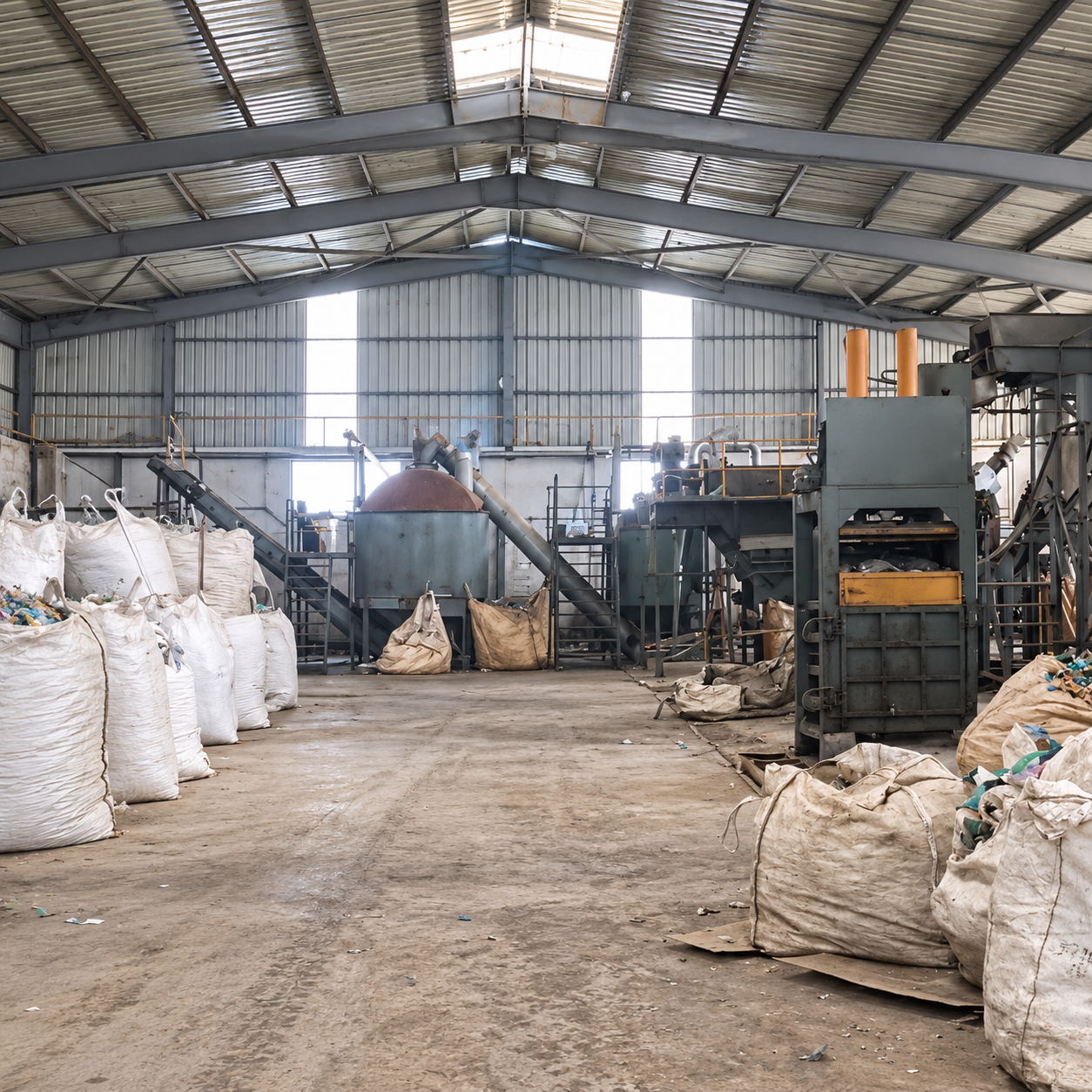
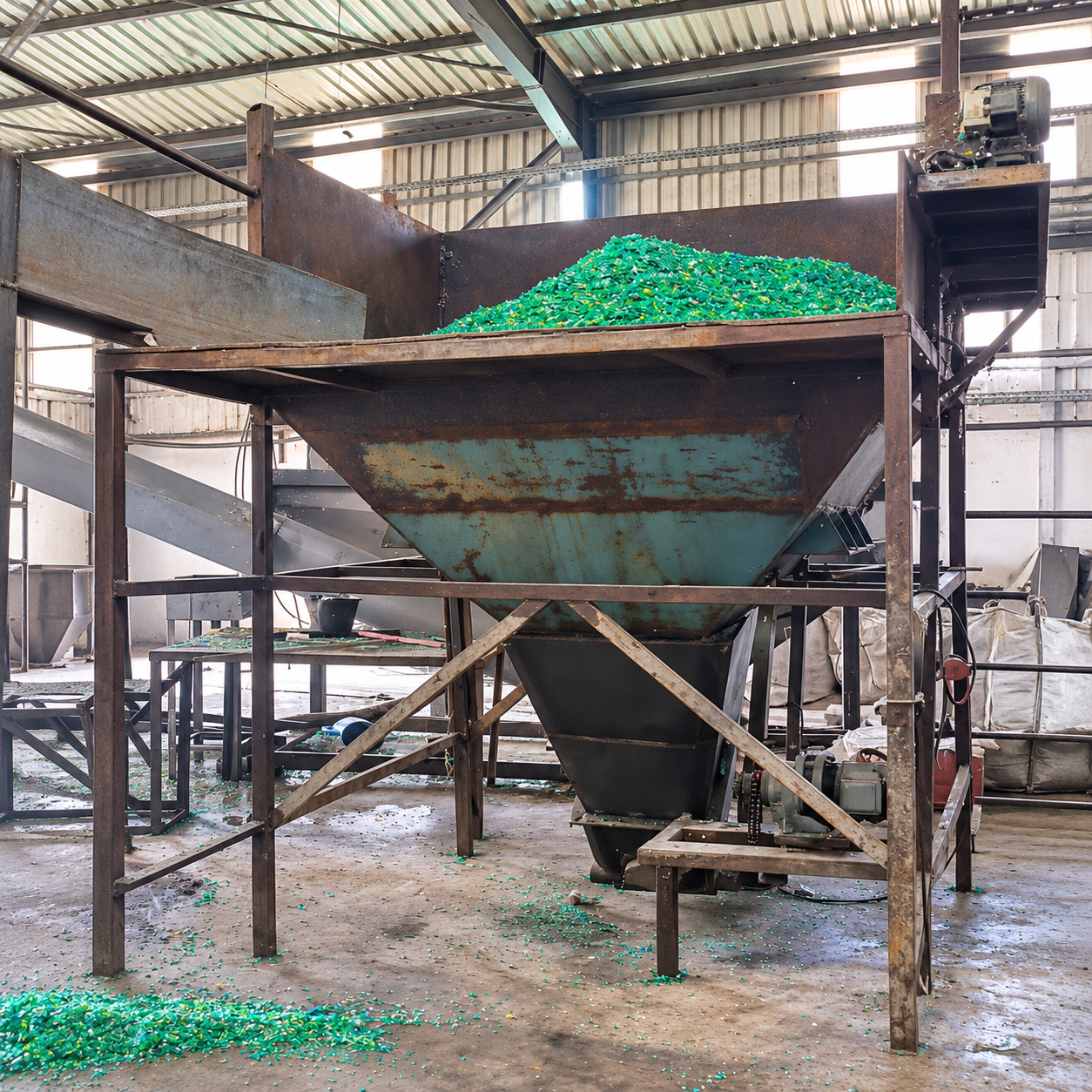
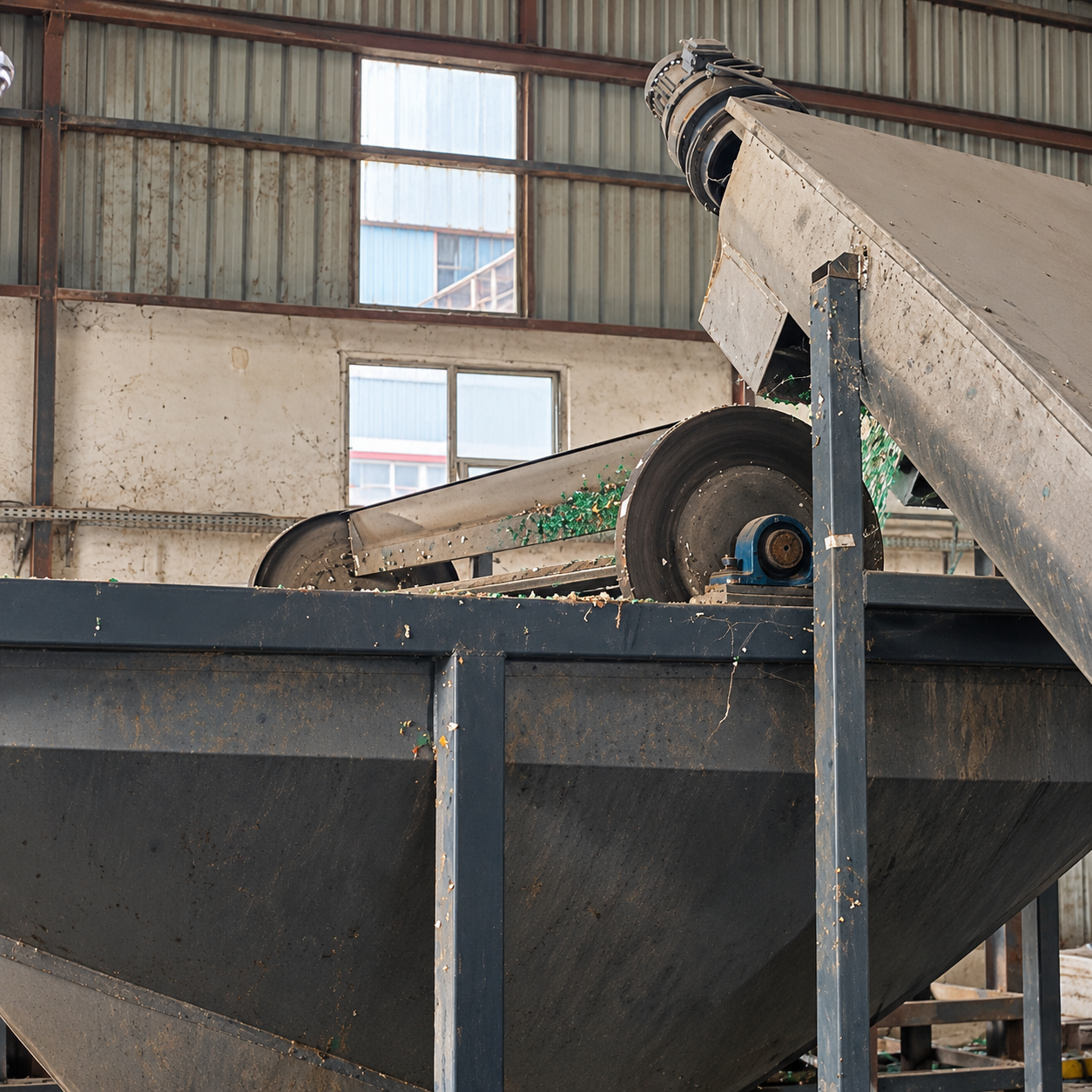
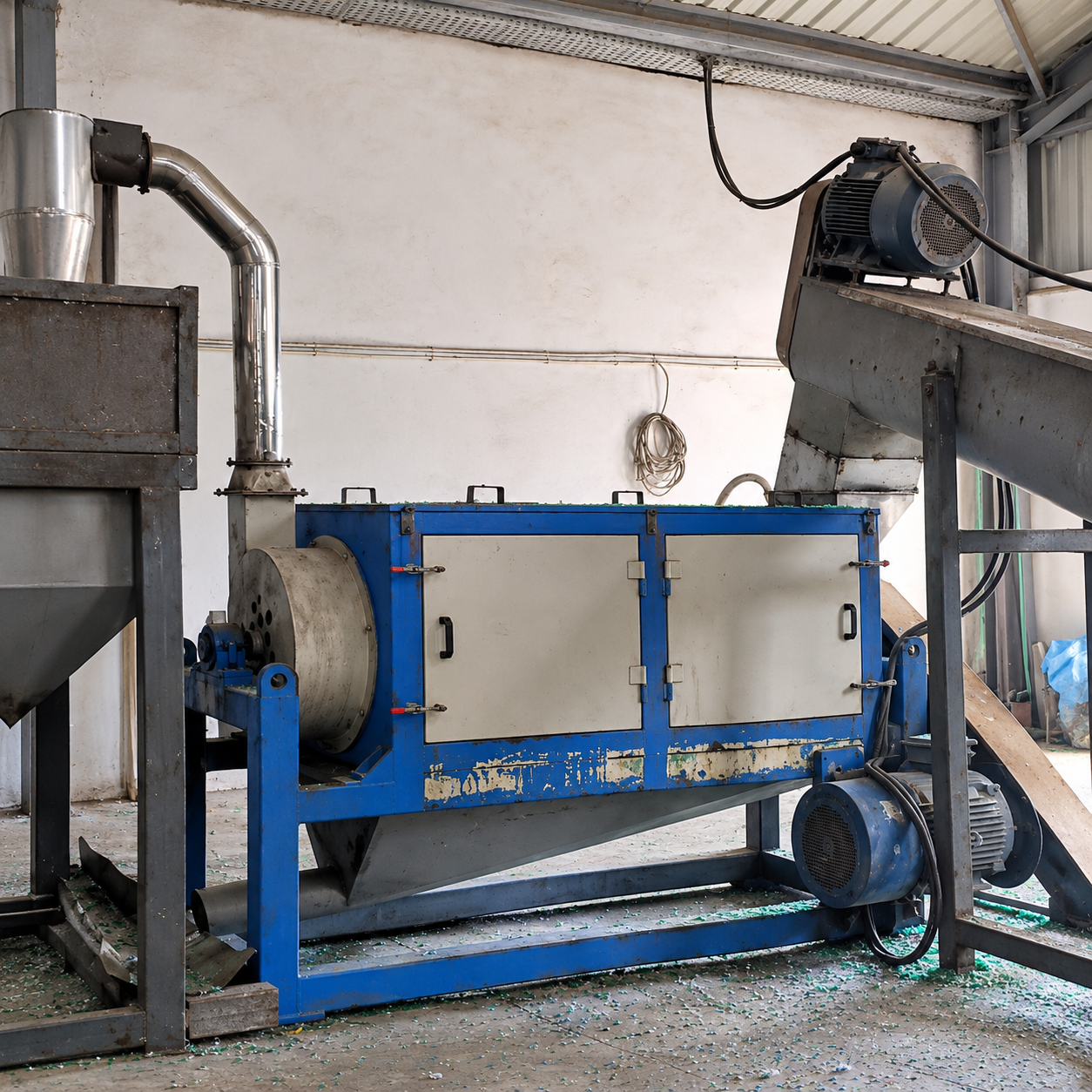
The site photographs show the installed PET washing equipment, material conveying sections, processing hoppers and bulk bags used for collecting or moving PET material inside the plant. The visible green flakes demonstrate the processed material handled by the system.
Why This Configuration Supports PET Fiber Production
PET fiber spinning requires a more controlled feedstock than unprocessed bottle waste. A complete PET bottle washing line provides several practical advantages for this application:
- Integrated material preparation: Bottle feeding, size reduction, washing and dewatering operate as one coordinated process.
- Removal of unwanted material: Sorting and separation stages reduce non-PET components and visible contamination before downstream use.
- Consistent flake handling: Conveying, buffer storage and controlled discharge support stable material movement through the plant.
- Application-specific configuration: The process can be configured around the incoming bottle condition and the customer's fiber-production requirements.
- Industrial throughput: The 1,000 kg/h design provides a production scale suitable for an established PET fiber operation.
URIDGE Equipment and Service Scope
- Project process analysis and washing-line configuration
- Complete 1,000 kg/h PET bottle washing and recycling line
- Material feeding, conveying and buffer-storage sections
- Sorting, size-reduction, washing and separation equipment
- Dewatering and clean-flake handling equipment
- Complete-line manufacturing, assembly and testing
- Shipment preparation and installation support
- Commissioning and production-start support
Installation and Project Result
The PET bottle washing line was installed and put into operation in Algiers in 2017. The completed system gave the customer a dedicated route for converting post-consumer PET bottles into clean flakes for its PET fiber spinning process.
The project photographs document the installed equipment and processed PET flakes at the customer's facility. Because this project was configured for fiber production, it is presented as a fiber-grade PET recycling application and does not make a food-contact or bottle-to-bottle certification claim.
Related Equipment
Learn more about the configurable URIDGE PET Bottle Washing and Recycling Line. The process configuration, final-flake specification and automation level are selected according to the incoming bottle material and the customer's downstream application.
Planning a similar line?
Discuss Your Project