Seattle, Washington, USA
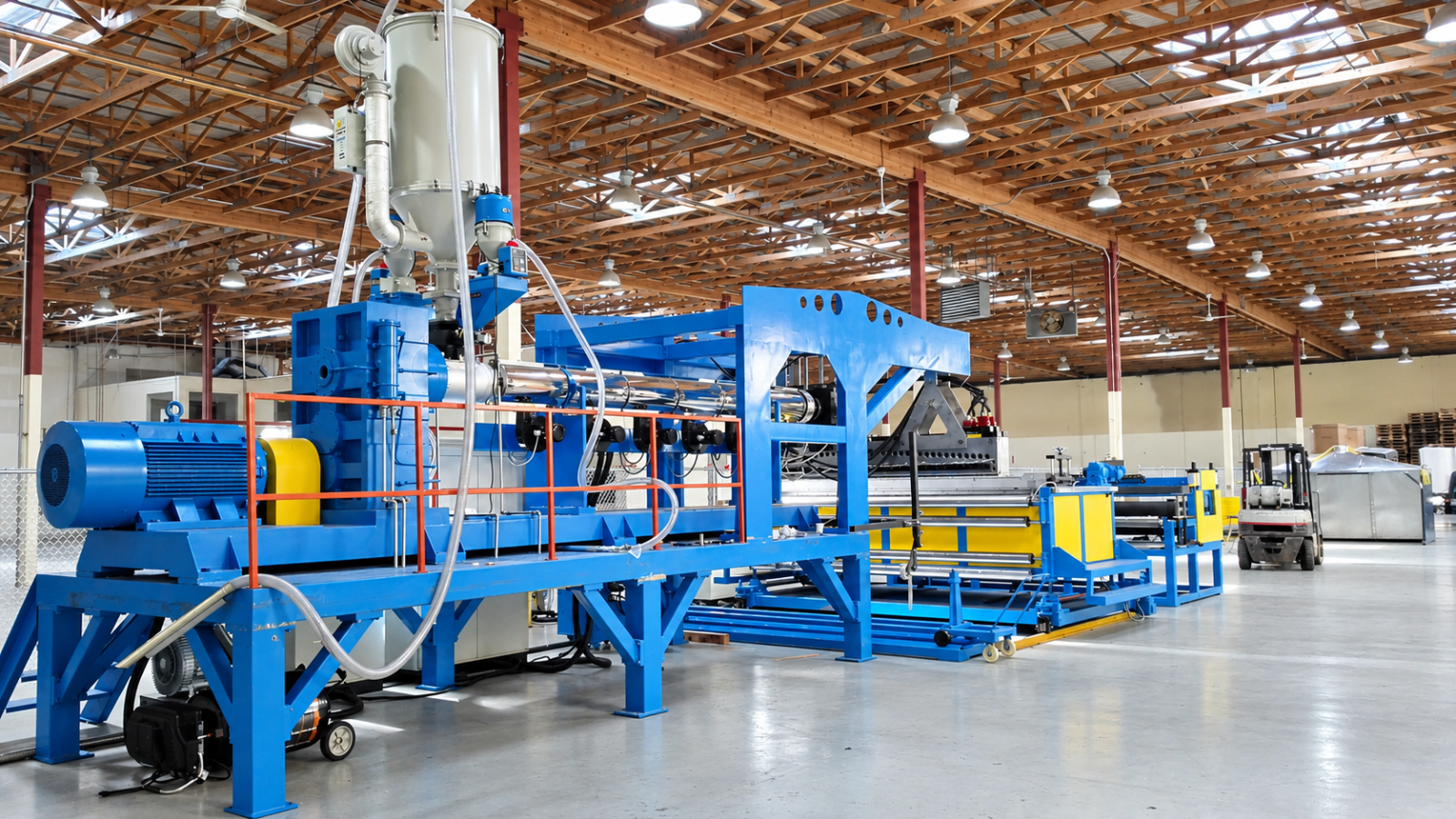
2.2 m PP Rainscreen Mat Extrusion Line – Seattle, USA
Equipment Supplied
2.2 m PP/PA Rainscreen Drainage Mat and 3D Entangled Mesh Extrusion Line
Project Overview
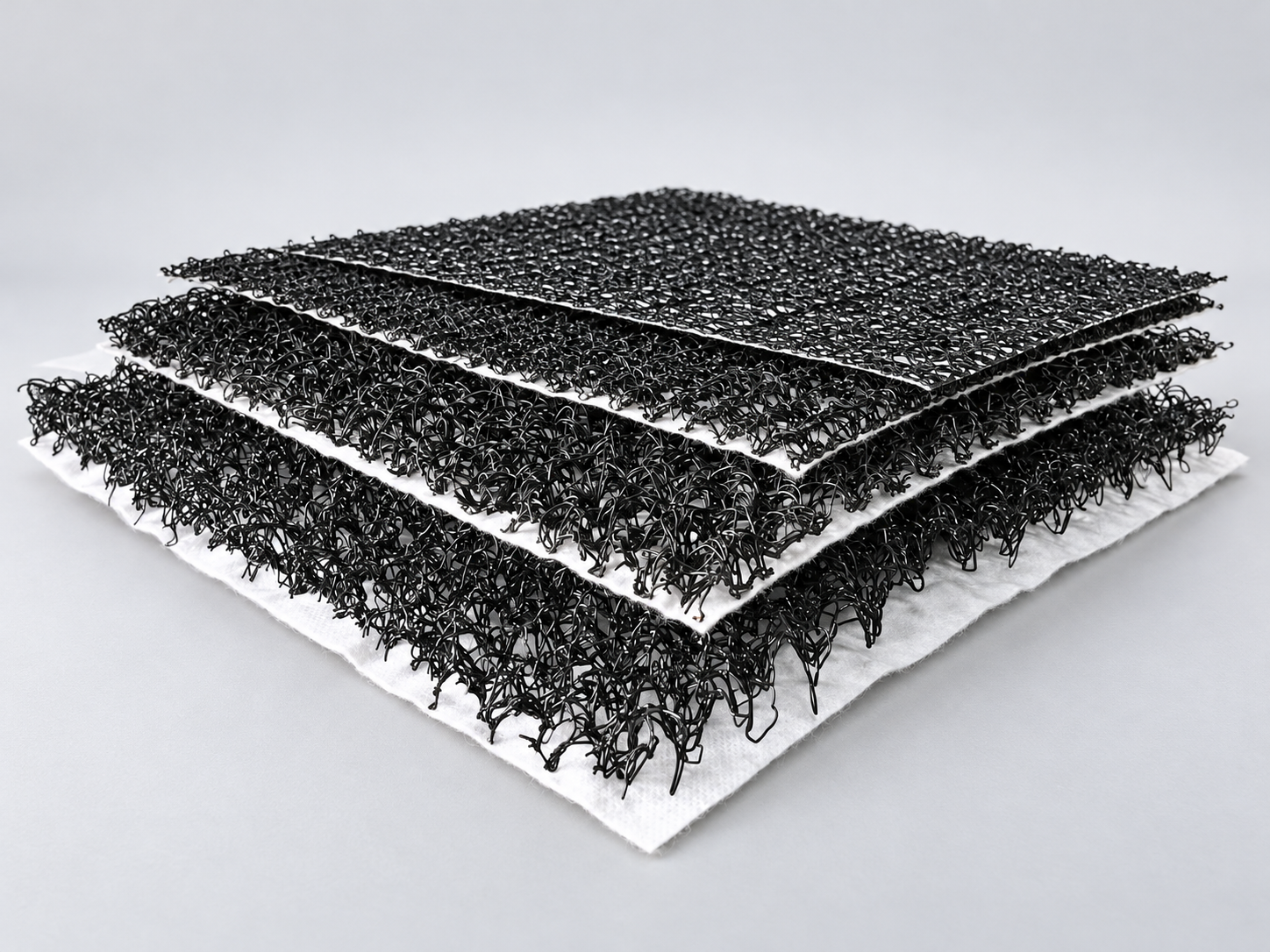
URIDGE supplied a PP rainscreen mat extrusion line to a building-materials manufacturer in Seattle, Washington, USA. The line was designed with a working width of 2.2 metres and a nominal production capacity of approximately 300 kg/h. It produces three-dimensional entangled-filament mats used as drainage and ventilation layers behind exterior wall cladding.
The equipment was ordered, installed and commissioned in 2018. The project combines polymer extrusion, filament forming, structured roller shaping, cooling, edge control and winding in one production system. The standard material for this project is polypropylene (PP), while the process configuration can also be adapted for suitable polyamide (PA/nylon) formulations after corresponding changes to material preparation and operating conditions.
Customer Application and Production Requirement
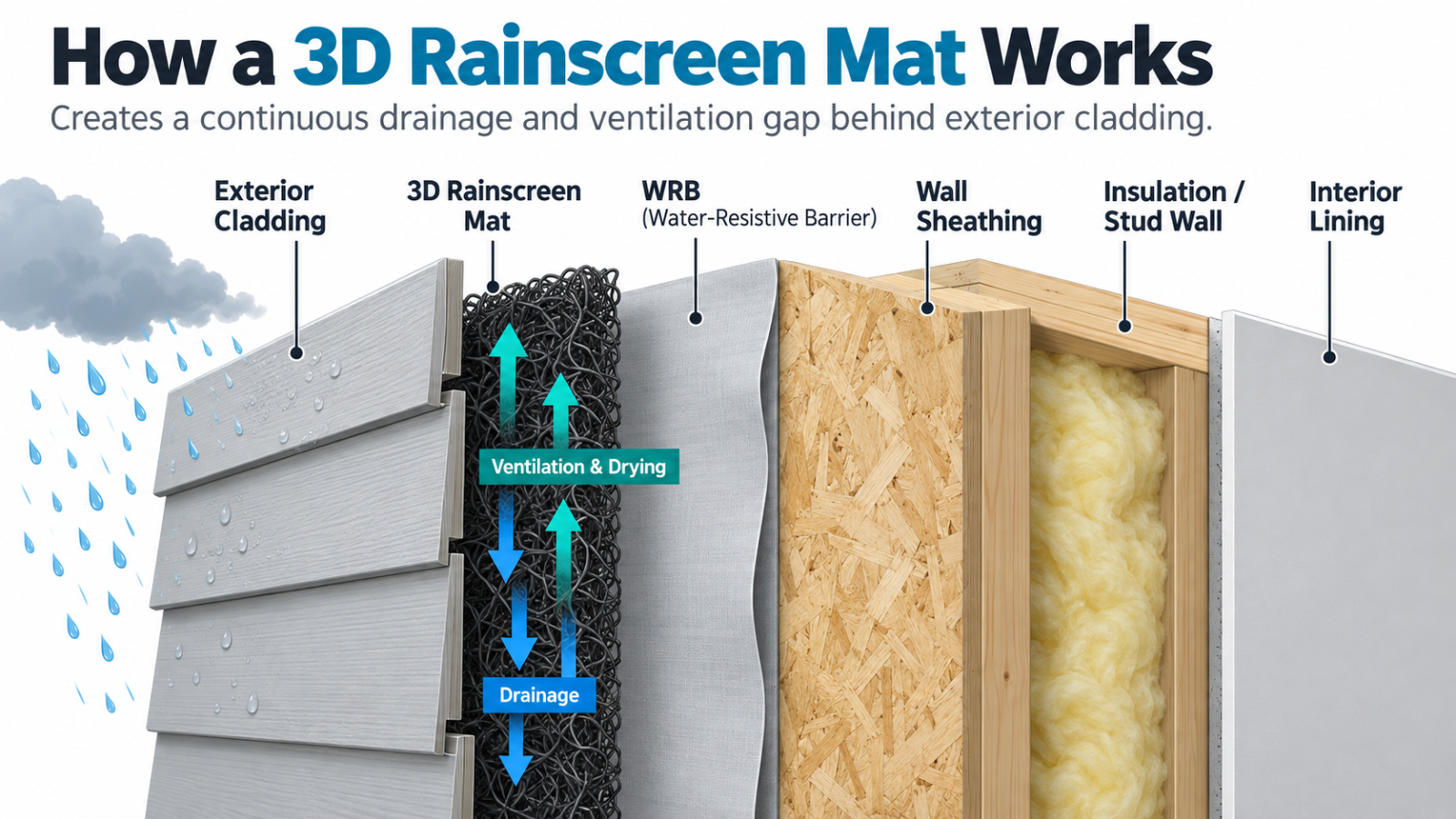
The customer operates in the construction-materials industry and required a dedicated production line for wide rainscreen drainage mats. The finished product needed an open, resilient three-dimensional structure that could create a continuous space behind exterior cladding for downward water drainage and air movement.
The project also required production flexibility. By changing the forming rollers and adjusting the extrusion and cooling parameters, the line can produce different filament layouts, surface profiles and mat structures for different wall-system requirements.
Main Project Specifications
| Project Location | Seattle, Washington, USA |
|---|---|
| Customer Industry | Building-envelope and construction materials |
| Production Line | PP rainscreen drainage mat / 3D entangled mesh extrusion line |
| Primary Raw Material | Polypropylene (PP) |
| Alternative Material | Suitable PA/nylon formulations with adjusted material preparation and process settings |
| Finished Product | Three-dimensional entangled-filament rainscreen drainage mat |
| Nominal Capacity | Approximately 300 kg/h |
| Maximum Working Width | 2.2 m |
| Structure Adjustment | Interchangeable forming rollers for different mesh profiles and filament patterns |
| Project Year | 2018 |
What Is a Rainscreen Drainage Mat?
A rainscreen drainage mat is installed within an exterior wall assembly, normally between the cladding and the water-resistive barrier (WRB). Its open three-dimensional structure maintains a space behind the cladding so incidental rainwater can move downward toward properly detailed flashing and drainage outlets. The same space can support air movement that helps the wall assembly dry.
The mat also acts as a capillary break by separating the back of the cladding from the drainage plane. It should not be described as the building's waterproofing membrane or vapour barrier. Effective moisture management still depends on the WRB, flashing, window and penetration details, drainage openings, cladding design and correct installation.
Typical Position in an Exterior Wall Assembly
A common rainscreen wall arrangement places the components in the following order from outside to inside:
- Exterior cladding: the primary outer surface exposed to weather.
- Rainscreen drainage mat: creates the drainage and ventilation space behind the cladding.
- Water-resistive barrier: forms the secondary drainage plane and helps protect the wall sheathing.
- Sheathing, insulation and structural wall: configured according to the building design.
At the base of the wall, the drainage path must discharge to the exterior through correctly designed flashing and drainage or weep openings. Openings, penetrations and transitions require compatible flashing details. The final wall assembly must comply with local building, fire and façade requirements.
Rainscreen Mat Production Process
1. Polymer Feeding and Extrusion
PP resin is fed to the extrusion system and melted under controlled temperature and pressure. When PA/nylon is selected, the material-preparation and drying requirements must be adjusted because nylon is more moisture-sensitive than PP.
2. Filament Formation
The molten polymer passes through a purpose-designed filament-forming die. Multiple continuous strands are distributed across the working width to create the open entangled structure required for drainage and ventilation.
3. Structured Roller Forming
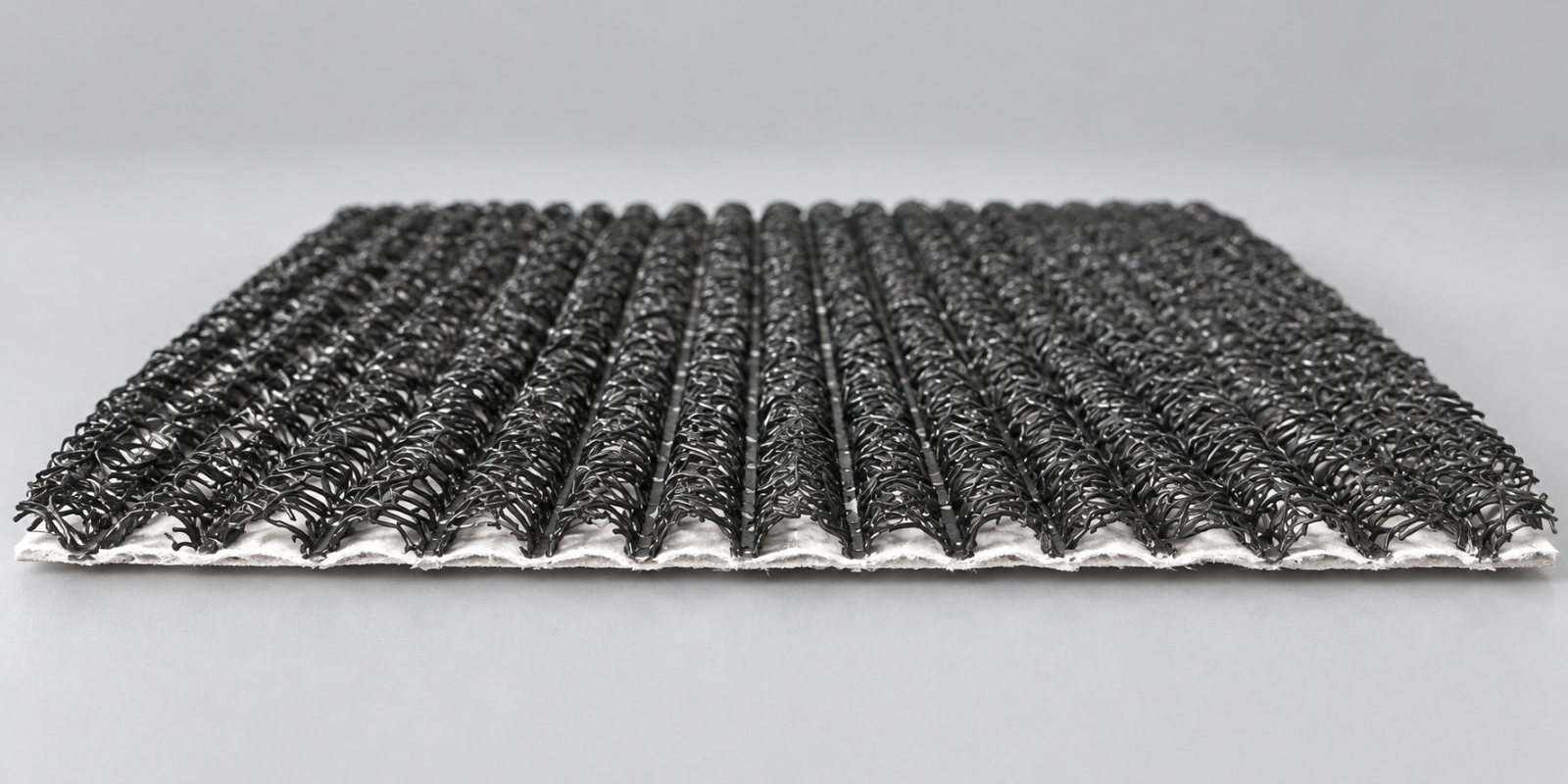
The hot filaments are guided into the forming section, where the roller arrangement controls the mat profile, filament orientation and surface pattern. Interchangeable rollers allow the customer to produce different three-dimensional mesh shapes without replacing the complete production line.
4. Cooling, Stabilisation and Edge Control
The formed web is cooled and stabilised so that it retains the required open structure. Edge control and trimming help maintain usable product width and a consistent roll profile.
5. Backing and Winding
Depending on the product design, the entangled filament layer can be combined with a compatible carrier or filter fabric. The finished rainscreen mat is then guided through the downstream section and prepared for winding, cutting or further conversion.
PP and PA Material Options
Polypropylene is well suited to this application because it is lightweight and resistant to moisture in normal service conditions. The same general line concept can be adapted for selected PA/nylon materials when the customer needs a different balance of stiffness, resilience or temperature performance.
Changing from PP to PA is not only a raw-material substitution. It may require dedicated drying, revised extrusion temperatures, different cooling conditions and validation of the finished product. URIDGE configures these parameters according to the selected polymer grade and target mat specification.
Flexible Mat Structures with Interchangeable Rollers
One of the main advantages of the Seattle line is its interchangeable roller system. Different roller geometries can change the visible filament arrangement and the supporting structure of the mat. This gives the customer a practical way to develop products with different:
- surface patterns and drainage channels;
- mat thicknesses and open-space structures;
- filament densities and compression characteristics;
- backing or carrier-fabric combinations; and
- finished widths and downstream conversion formats.
Construction and Installation Considerations
- Maintain a continuous drainage path: Avoid blocking the cavity with sealant, mortar or incompatible fasteners.
- Direct water to the exterior: Use properly integrated flashing and drainage openings at the base of the wall and above interruptions.
- Protect ventilation openings: Where required, detail openings to limit insect entry without stopping drainage or airflow.
- Control compression: Select mat thickness and compressive resistance for the cladding attachment system.
- Coordinate all wall components: Confirm compatibility with the WRB, insulation, flashing, cladding and fasteners.
- Follow project requirements: The wall designer must verify local code, fire, wind, structural and façade-performance requirements.
URIDGE Equipment and Service Scope
- Process design for PP rainscreen drainage mat production
- Raw-material feeding and extrusion system
- 2.2 m filament-forming and distribution section
- Interchangeable roller forming system
- Cooling, stabilisation and edge-control equipment
- Backing-fabric handling and downstream winding section
- Complete-line manufacturing and factory preparation
- On-site installation, commissioning and operator training
Installation and Project Result
The PP rainscreen mat extrusion line was installed and commissioned in Seattle in 2018. The completed system gave the customer a dedicated 2.2 m production platform for manufacturing three-dimensional drainage and ventilation mats at a nominal capacity of approximately 300 kg/h.
The project demonstrates how an entangled-filament extrusion process can be adapted from general three-dimensional mesh production to a specialised building-envelope application. The interchangeable forming system also gives the customer flexibility to develop alternative mat profiles and material combinations.
Related Entangled-Filament Extrusion Equipment
Learn more about the URIDGE 3D and 4D entangled-filament extrusion platform. Die design, working width, forming rollers, polymer selection and downstream handling can be configured for rainscreen drainage mats and other open-structure mesh products.
Planning a similar line?
Discuss Your Project