Kansas, USA
3.2 m Wide PP Rainscreen Mat Extrusion Line – Kansas, USA
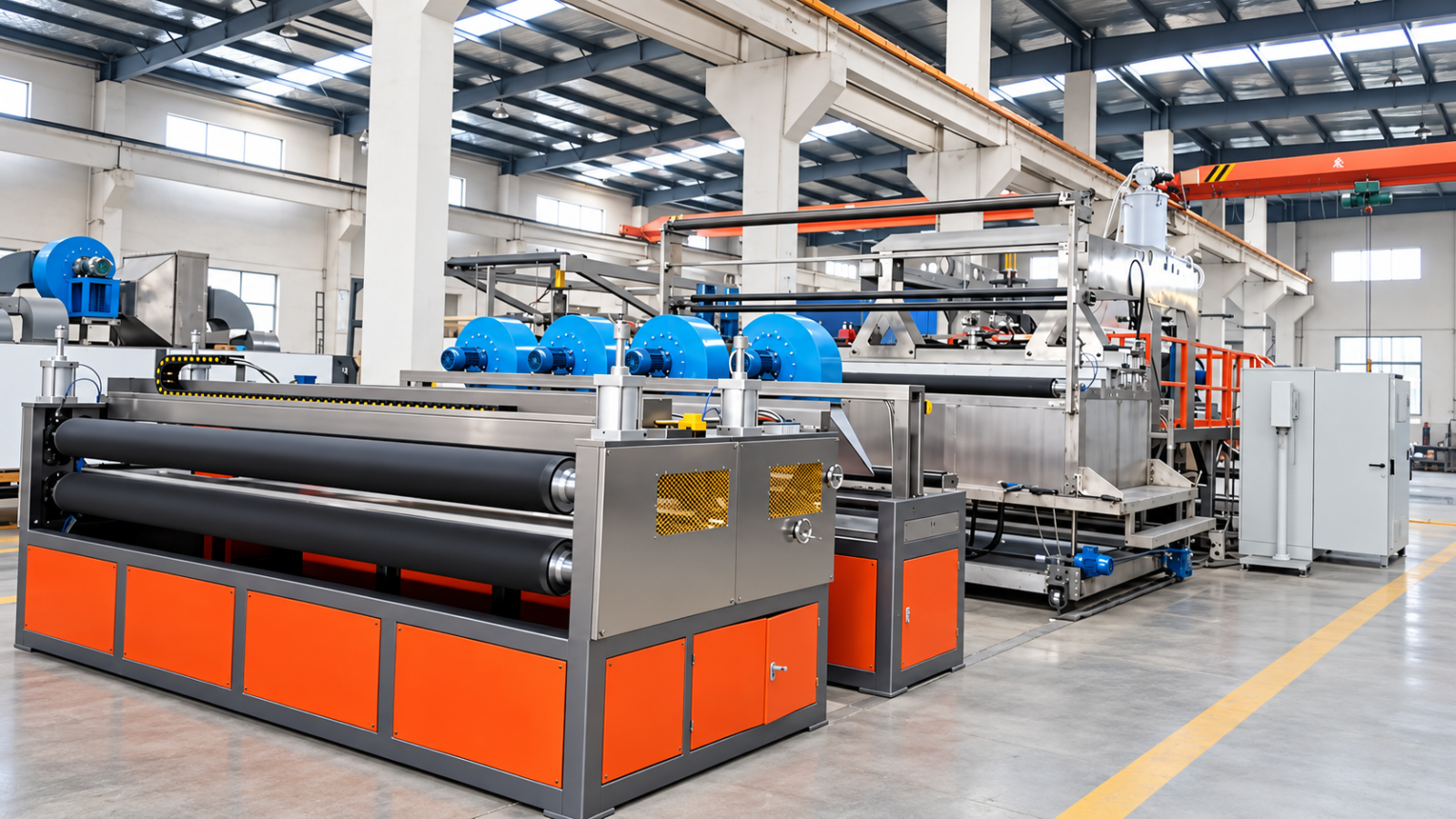
Equipment Supplied
3.2 m PP Rainscreen Drainage Mat and 3D Entangled Mesh Extrusion Line
Project Overview
URIDGE designed and supplied a customized 3.2 m wide PP rainscreen mat extrusion line for a building-materials manufacturer in Kansas, USA. The equipment produces wide three-dimensional entangled-filament mats with a backing layer for use as drainage and ventilation components in exterior wall assemblies.
The project was completed in 2018. Compared with a conventional-width line, the 3.2 m system required more careful control of melt distribution, filament laydown, cooling, backing alignment and downstream tension. The objective was to maintain a stable profile from one edge of the mat to the other while giving the customer greater flexibility in slitting and converting the wide web into finished product formats.
Customer Requirement
The customer needed a wider production platform for construction-grade entangled mesh products. A 3.2 m working width allows multiple narrower rolls to be slit from one wide web or enables the manufacturer to supply broad-format material where fewer longitudinal joints are preferred.
The line also had to combine the open plastic filament layer with a carrier or backing fabric. This required stable tracking and controlled tension so that the backing remained aligned without wrinkling or pulling the still-forming mesh out of shape.
Main Project Specifications
| Project Location | Kansas, USA |
|---|---|
| Customer Industry | Building-envelope and construction materials |
| Production Line | Wide PP rainscreen drainage mat / 3D entangled mesh extrusion line |
| Working Width | 3.2 m |
| Primary Material | Polypropylene (PP) |
| Finished Product | 3D entangled-filament drainage mat with backing fabric |
| Nominal Output | Project-specific; varies with basis weight, thickness, density and line speed |
| Project Year | 2018 |
Why a 3.2 m Working Width Matters
Wide-web production changes both the commercial possibilities and the engineering requirements of the line. A broad master web can be converted into different roll widths according to customer orders. It may also reduce trim loss and the number of production changeovers when several narrower products share the same structure.
For downstream users, wider material can reduce the number of joints required over a large wall area, depending on the installation method and building design. Fewer joints can simplify material handling, but the final roll size and weight still need to match practical transport and on-site installation limits.
The extra width is useful only when the mat remains consistent. Uneven filament weight, backing drift or different cooling conditions across the web can create local changes in thickness and compression. The 3.2 m line was therefore engineered around cross-web uniformity rather than width alone.
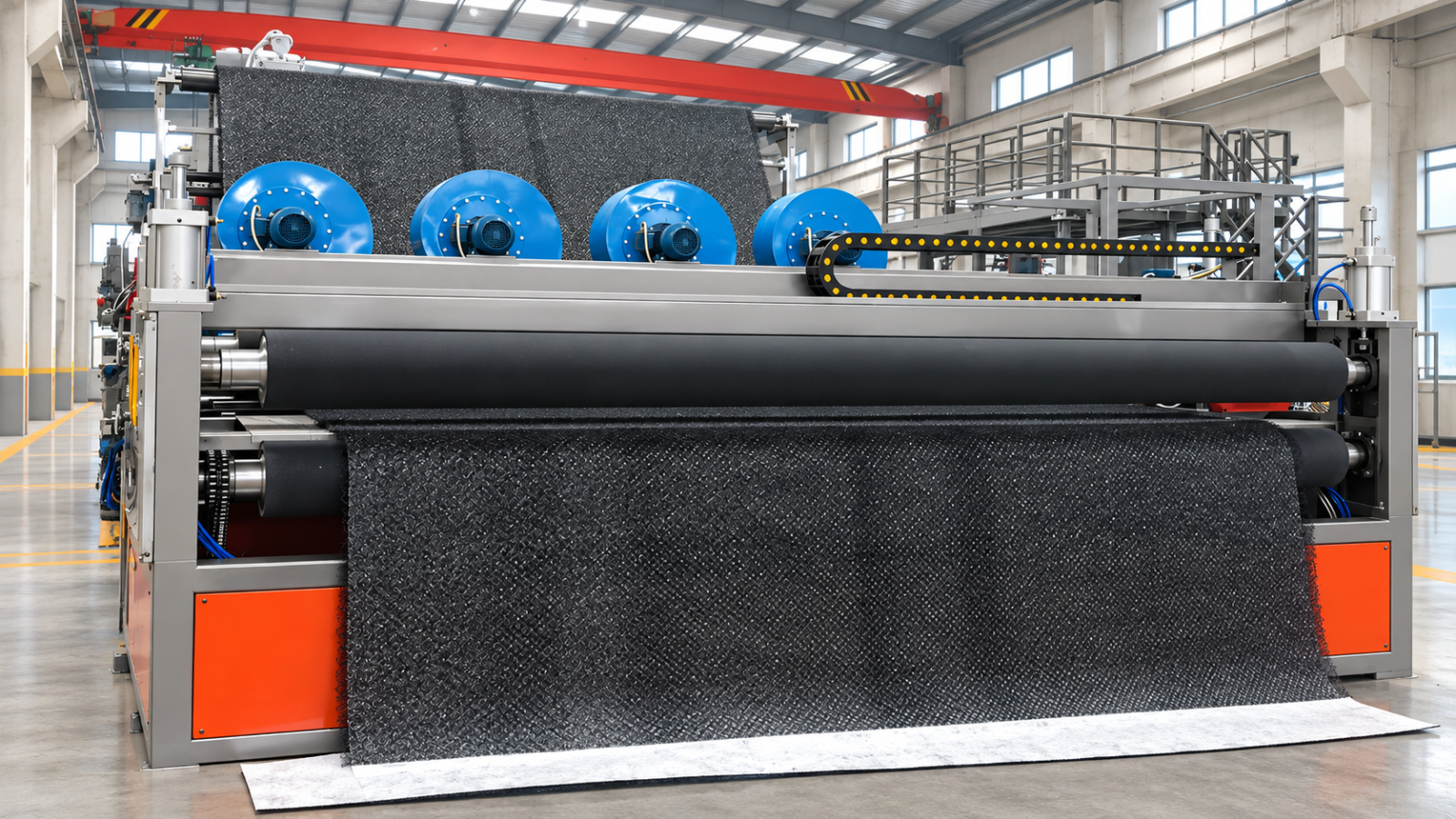
Engineering the Wide Entangled-Filament Structure
Stable Melt Delivery
The extruder must deliver a uniform and well-homogenized PP melt to the filament-forming section. Temperature and pressure variation can change filament diameter, which then affects basis weight, open volume and compression behaviour. Stable feeding, suitable screw design and controlled filtration are therefore essential.
Flow Distribution Across 3.2 Metres
A wide forming system must distribute polymer consistently across the usable width. The flow path and filament outlets are balanced so the centre and both edges receive comparable material. During trial production, the finished mat should be checked at several positions across the web rather than assessed only by an overall average weight.
Filament Laydown and Profile Formation
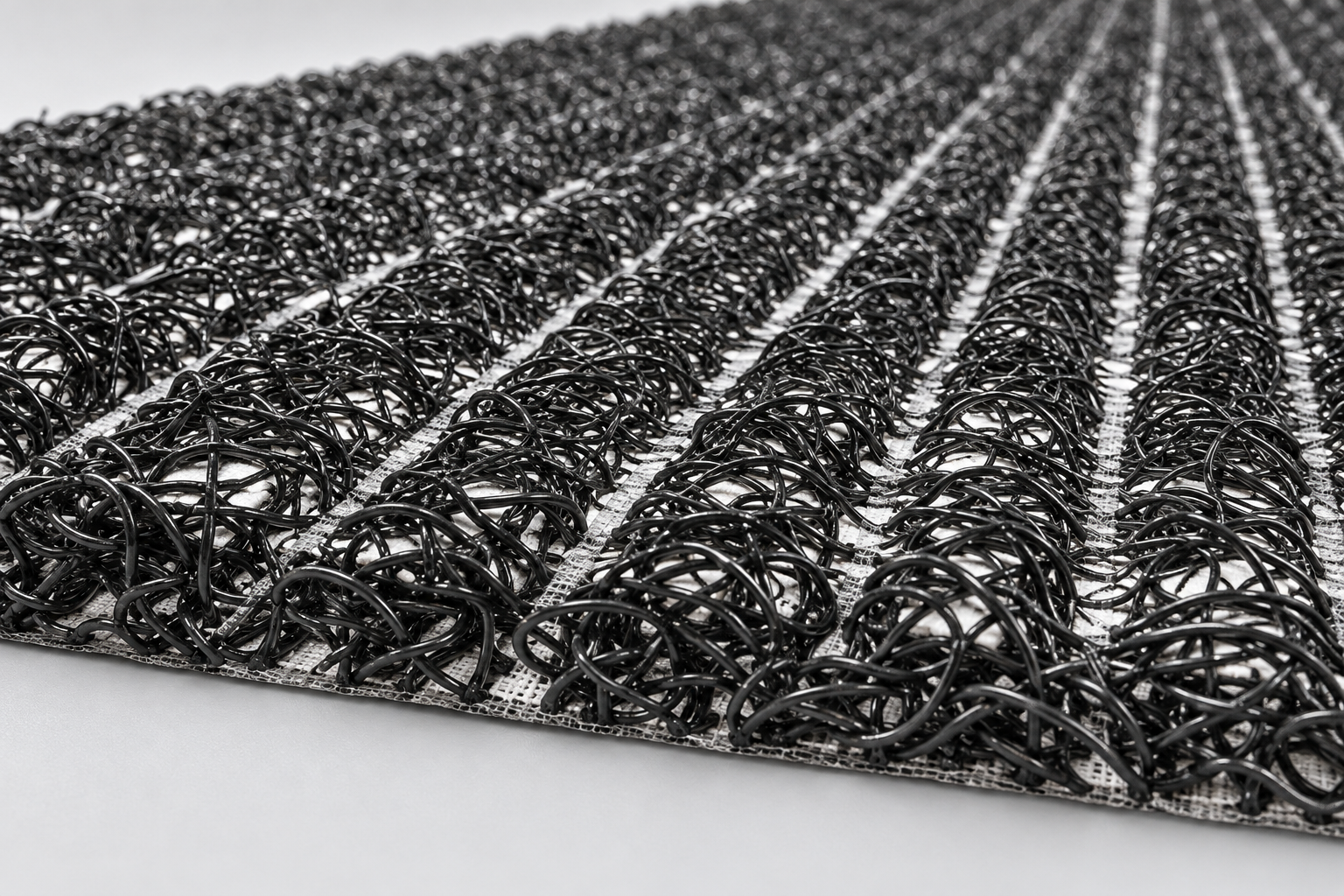
The molten strands are laid into an open three-dimensional arrangement while they remain hot enough to bond at contact points. The forming geometry establishes the drainage channels, surface profile and support structure. The target is a connected network that remains open without using more polymer than the product requires.
Cooling and Structural Stabilization
The wide mat is cooled and stabilized before significant downstream tension is applied. Cooling must be even across the full width; otherwise, one side may shrink or set differently from the other. The cooling and forming section in this project was sized for the broad web and coordinated with the extrusion rate and line speed.
Air Removal, Backing Integration and Web Handling
After cooling, residual surface water must be removed without flattening or stretching the three-dimensional profile. The line uses distributed air-handling equipment across the width so the mat can move into the downstream section in a controlled condition.
The backing fabric is introduced with controlled alignment and tension. Excessive tension can distort the open mesh, while insufficient tension may create folds. The backing and plastic structure must travel together smoothly through the downstream rollers so that the finished web can be wound or converted consistently.
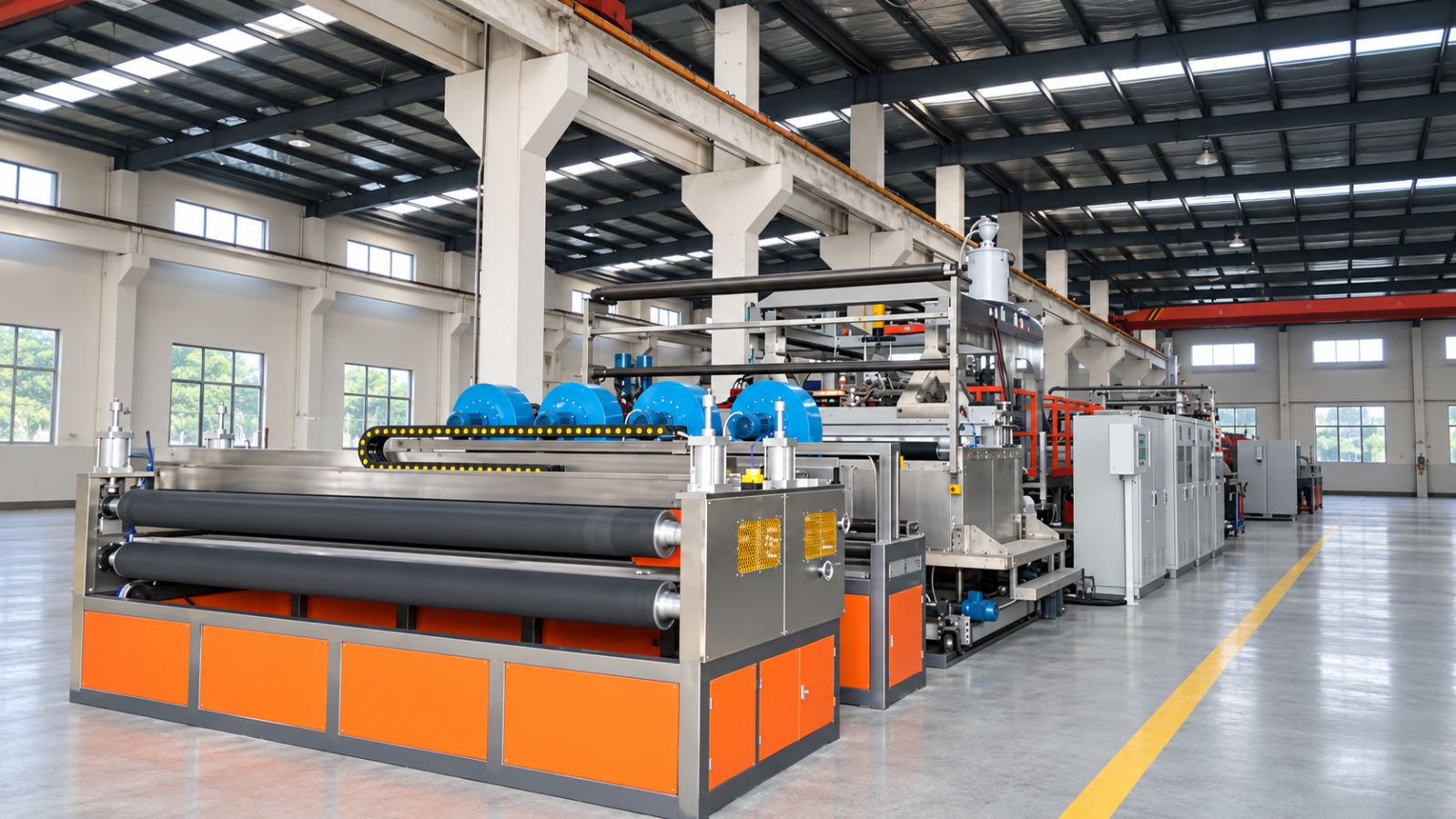
Product Function in a Wall Assembly
A 3D rainscreen mat is normally positioned behind exterior cladding and in front of the water-resistive barrier. The open structure maintains a physical separation that allows incidental water to drain toward correctly detailed flashing and drainage openings. Air movement within the same space can support drying after bulk water has left the wall.
The mat is not the waterproof layer and should not be treated as a substitute for the WRB. Wall performance still depends on the complete assembly, including flashing, windows, penetrations, insulation, fasteners, cladding attachment and local building requirements.
Quality-Control Points for Wide Rainscreen Mats
For a 3.2 m product, quality checks should be taken from the left, centre and right portions of the web. Important items include:
- finished width and edge condition;
- basis-weight variation across the web;
- mat thickness and drainage-channel geometry;
- filament diameter and bond consistency;
- compression and recovery behaviour;
- backing alignment and bond integrity;
- surface moisture after air removal; and
- winding tension, roll shape and telescoping.
Product specifications should be confirmed using the customer's actual PP grade, backing fabric and target structure. Output cannot be judged by machine width alone because a heavier or thicker mat requires more polymer per square metre and may operate at a different line speed.
URIDGE Equipment and Service Scope
- Process configuration for 3.2 m PP entangled-filament mat production
- Raw-material feeding and extrusion system
- Wide melt-distribution and filament-forming section
- Profile forming and water-cooling equipment
- Distributed air removal and structural stabilization
- Backing-fabric feeding and alignment
- Wide-web downstream handling and winding preparation
- Factory assembly, trial production and project documentation
- Installation, commissioning and operator training supportFactory Testing and Project Result
Before delivery, the line was assembled and trialled with the wide black entangled-filament mat and backing material. The test focused on continuous web formation, edge-to-edge stability, cooling, air removal and downstream transport. The production system was subsequently installed for the customer in Kansas in 2018.
The completed project gave the customer a dedicated 3.2 m platform for manufacturing wide drainage and ventilation mats. It also demonstrates how a standard entangled-filament process must be re-engineered when the working width increases: melt distribution, mechanical rigidity, cooling and web tension all become more sensitive as the span grows.
Related Entangled-Filament Extrusion Technology
Learn more about the URIDGE related 3D and 4D entangled-filament extrusion platform. Working width, die configuration, forming structure, polymer selection, backing handling and downstream equipment can be engineered around the required drainage mat or open-mesh product.
Planning a similar line?
Discuss Your Project